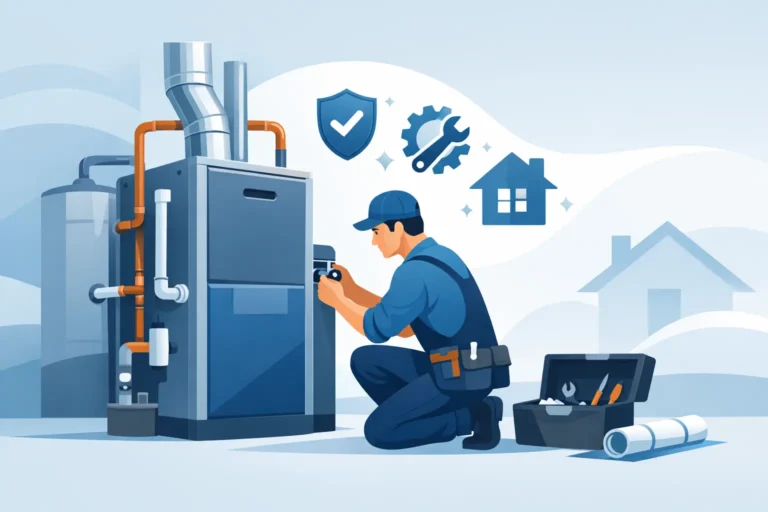
Furnace Installation Done Right
A furnace that is too old, too noisy, or too unreliable usually gives you fair warning. Maybe it struggles on cold mornings. Maybe your energy bills keep climbing even though your thermostat settings have not changed. Maybe repairs are starting to feel like throwing good money after bad. When that happens, furnace installation stops being a future project and becomes a decision that affects comfort, safety, and monthly costs right away.
In Central California, heating may not run as hard as cooling for most of the year, but when temperatures drop, you still need a system that starts when it should, heats evenly, and does not waste money doing it. A new furnace can solve a lot of problems, but only if the system is chosen and installed correctly. The equipment matters, of course. The workmanship matters just as much.
Why furnace installation is more than swapping a box
A lot of homeowners assume replacing a furnace is simple - remove the old unit, slide in a new one, reconnect everything, and call it done. In real homes and small commercial spaces, it is rarely that straightforward. The new system has to match the building, the ductwork, the fuel source, the airflow requirements, and the comfort expectations of the people using the space.
If the furnace is oversized, it can short cycle. That means it turns on and off too often, which wears parts down and can leave rooms unevenly heated. If it is undersized, it may run constantly and still struggle to keep up. Poor airflow can make even a high-quality furnace perform badly. Installation mistakes around venting, gas connections, drainage, or controls can create safety risks and expensive callbacks.
That is why a proper installation starts with evaluation, not guesswork. A contractor should look at the age and condition of the current system, the layout of the home or building, insulation levels, duct condition, and any comfort issues you have already noticed. If one back bedroom is always colder than the rest of the house, that should be part of the conversation before new equipment goes in.
What to expect during furnace installation
A good furnace installation process should feel organized and transparent. It starts with an estimate and a discussion about what is actually needed. Not every home needs the highest-end unit on the market. Not every older furnace needs to be replaced immediately either. Honest recommendations matter because the right answer depends on budget, building condition, and how long you plan to stay in the property.
Once the system is selected, the installation day usually includes removing the old equipment, preparing the location, setting the new furnace, reconnecting gas and electrical components, checking the venting system, and testing the unit thoroughly. In some cases, the job may also involve thermostat updates, transition pieces, safety shutoffs, filter base improvements, or minor duct modifications to help the new system perform the way it should.
That last part is where quality workmanship shows up. A new furnace should not simply turn on. It should operate safely, move air properly, and heat the space consistently. Final testing should include airflow checks, temperature rise, control operation, and confirmation that the system cycles correctly.
Choosing the right furnace for your property
There is no single best furnace for every home or business. The right choice depends on the square footage, insulation, duct design, fuel type, and your comfort priorities. Some customers care most about lower upfront cost. Others want better efficiency and quieter operation. Both are valid goals.
Single-stage furnaces are typically the most budget-friendly option. They are reliable and straightforward, but they run at one heating level only. Two-stage and variable-speed systems offer more control and often better comfort because they can adjust output more gradually. That can mean fewer temperature swings, quieter performance, and better efficiency in the long run.
Efficiency ratings matter, but they should be looked at honestly. A higher-efficiency unit can reduce energy use, but the return depends on how often you run the system and whether the rest of the house supports that performance. If duct leaks, poor insulation, or airflow restrictions are ignored, you may not get the value you expect from premium equipment.
For some properties, a furnace replacement is also the right time to think about the system as a whole. If the air conditioner is aging too, or if the ductwork has known issues, addressing those together can make more sense than treating each part separately. It depends on the condition of the existing setup and the long-term plan for the property.
Signs your current furnace should be replaced
Repairs are part of owning HVAC equipment, and not every service call means you need a new unit. Still, there comes a point when replacement becomes the more practical choice. Age is one factor. If a furnace is 15 to 20 years old and starting to fail more often, replacement is worth serious consideration.
Uneven heating, frequent cycling, rising utility bills, loud startup noises, burner issues, and repeated repair costs are also common signs. If the heat exchanger is cracked or the system has a serious safety concern, replacement usually moves from optional to necessary.
The key is not to replace too early or too late. Waiting too long can leave you with an emergency breakdown during cold weather, limited replacement options, and a rushed decision. Replacing too soon can mean spending money before the existing system has truly reached the end of its useful life. A trustworthy contractor will explain the trade-offs clearly instead of pushing a sale.
Common furnace installation mistakes to avoid
The biggest problems usually happen before the unit is ever turned on. Incorrect sizing is one of the most common issues. Another is assuming the old duct system is fine just because it is already there. Duct leaks, crushed sections, poor return airflow, or undersized runs can all hold a new furnace back.
Bad venting is another serious concern. High-efficiency furnaces have specific venting and drainage requirements, and those details are not optional. Improper installation can affect safety, performance, and code compliance. Cheap shortcuts around gas piping, drain lines, electrical connections, or condensate management can create problems that show up immediately or months later.
There is also the issue of skipping setup and testing. A furnace is not finished when it is physically installed. If blower settings are not adjusted correctly, thermostat controls are not configured properly, or airflow is not verified, the system may never perform the way it was designed to.
Why local experience matters
Heating needs in the Turlock area are different from places with long, severe winters. That affects how systems are sized, how often they run, and what customers value most. Local service matters because a contractor familiar with Central California homes and commercial properties is more likely to make practical recommendations instead of applying a one-size-fits-all approach.
Older homes may have duct issues that newer construction does not. Small businesses may need installation timing that limits disruption during work hours. Some customers want the most affordable replacement that is still dependable. Others want to improve comfort in rooms that have never heated properly. A local company with broad HVAC experience can look at those real-world factors and build the job around them.
That is part of why family-owned companies like Mel's Heat & Air Inc. have earned trust over time. People want straight answers, solid workmanship, and a system that lasts. They do not want pressure. They want to know what they are paying for and why it makes sense.
Furnace installation and long-term value
A new furnace is not just about getting through the next cold snap. Done right, it can improve comfort for years, reduce service headaches, and help control operating costs. But long-term value comes from the full picture - proper sizing, careful installation, duct performance, quality components, and regular maintenance after the job is done.
Even the best furnace still needs filter changes, seasonal inspections, and attention when small problems show up. Skipping maintenance can shorten the life of the equipment and chip away at efficiency over time. On the other hand, a well-installed system that is maintained properly often rewards owners with steadier performance and fewer surprises.
If you are considering furnace installation, the best next step is to slow the process down just enough to ask the right questions. What size system does the property actually need? Are there duct or airflow issues that should be fixed now? What level of efficiency makes sense for the budget? What will the installation include beyond the equipment itself? Good answers now can save you frustration later.
The right furnace should do its job quietly and reliably in the background. If you rarely have to think about it once it is installed, that usually means the job was done the right way.
When a Central California heat wave settles in, your AC can feel like it never gets a break. If you are looking for the best ways reduce cooling bills, the answer usually is not one big fix. It is a handful of smart changes that lower strain on your system, keep cool air where it belongs, and help your home stay comfortable without running the AC nonstop.
The good news is that some of the biggest savings come from simple habits and basic maintenance. Others involve upgrades that cost more upfront but pay off over time. The right mix depends on your home, your equipment, and how long you plan to stay there.
The best ways reduce cooling bills start with airflow
A lot of homeowners assume high summer bills mean the air conditioner itself is failing. Sometimes that is true, but often the real issue is restricted airflow. When air cannot move properly through the system, your AC works harder, runs longer, and uses more electricity to do the same job.
Start with the air filter. A dirty filter is one of the most common reasons a system loses efficiency. If you have pets, live near dusty roads, or run the AC heavily, that filter may need to be changed more often than you think. A clogged filter does not just affect your bill. It can also shorten equipment life.
Supply vents and return grilles matter too. If furniture, rugs, or curtains are blocking them, cooled air cannot circulate the way it should. That can create hot spots in some rooms while the thermostat keeps calling for more cooling. The system keeps running, but comfort does not improve much.
Set your thermostat with purpose
Thermostat settings make a real difference, but the goal is not to make the house uncomfortable just to save a few dollars. The better approach is to avoid overcooling when nobody needs it.
If the house is empty during the day, raise the temperature a few degrees and let the system ease back. Then have it return to your comfort setting before everyone gets home. A smart thermostat can help, especially in households with changing schedules, but even a programmable thermostat can cut waste if it is used correctly.
That said, dramatic setbacks are not always better. In very hot weather, asking the AC to recover from a large temperature jump can mean long run times late in the day when outdoor heat is still intense. For many homes, a moderate adjustment gives better results than swinging the thermostat way up and way down.
Seal the leaks that let cool air escape
One of the best ways to reduce cooling bills has nothing to do with lowering the thermostat. It has to do with keeping the cooled air you already paid for.
Air leaks around doors, windows, attic access points, and duct connections quietly drive bills up. In older homes especially, conditioned air can escape into the attic, crawlspace, or outdoors while hot air sneaks in. Your AC then has to make up for that loss all day long.
Weatherstripping and caulking can help around windows and doors. Duct leaks are another major issue, and they are often hidden. If parts of your home always feel warmer than others, or if your system seems to run constantly, leaking or poorly designed ductwork may be part of the problem. This is one of those areas where a professional inspection can save a lot of guessing.
Don’t overlook attic insulation
In our area, attic heat builds fast. If your attic insulation is thin, damaged, or outdated, that trapped heat pushes down into the living space and makes your cooling system fight an uphill battle.
Good insulation slows heat transfer. That means your home holds on to cooled air better and warms up more slowly between cycles. The result is a steadier indoor temperature and less demand on the AC.
Insulation is not the flashiest upgrade, but it often delivers solid value. It also helps in winter, so the benefit is not limited to one season. The trade-off is that the payoff depends on what you already have. If your insulation is in decent shape, savings may be modest. If it is lacking, the improvement can be substantial.
Keep heat out before your AC has to remove it
The easiest heat for your AC to handle is the heat that never enters the home in the first place. Afternoon sun through windows can raise indoor temperatures quickly, especially in west-facing rooms.
Closing blinds, shades, or curtains during the hottest part of the day helps more than many people expect. Solar screens, reflective window treatments, and energy-efficient window upgrades can go further if heat gain is a constant issue. Even using kitchen appliances, ovens, or dryers later in the evening can reduce how much extra heat your cooling system has to remove.
Ceiling fans can help too, not by lowering the actual air temperature, but by helping people feel cooler. That can let you set the thermostat a little higher without sacrificing comfort. Just remember that fans cool people, not empty rooms, so turn them off when you leave.
Schedule AC maintenance before small problems turn expensive
If your air conditioner is low on refrigerant, has dirty coils, weak electrical components, or a blower issue, it can still run while quietly wasting energy. That is why routine maintenance is one of the best ways reduce cooling bills over the long term.
A tuned system usually cools more effectively, cycles more normally, and is less likely to break down during the hottest stretch of the season. Maintenance also gives you a chance to catch worn parts before they cause a larger repair.
This is where experience matters. A good HVAC technician should tell you what is actually needed, what can wait, and whether the system still has useful life left. Honest service saves money in two ways. It improves performance today and helps you avoid replacing equipment before it is truly necessary.
Check whether your system is the right size
Bigger is not always better with air conditioning. An oversized system may cool the house quickly, but it can short cycle, turning on and off too often instead of running long enough to remove humidity evenly and maintain steady comfort. An undersized system has the opposite problem. It runs constantly and may still struggle to keep up.
Either way, efficiency suffers. If your home has uneven cooling, frequent cycling, high humidity, or consistently high electric bills even after basic improvements, system sizing could be part of the issue. The same goes for homes that have been remodeled, added on to, or had major window changes over time.
A proper load calculation is more useful than guessing based on square footage alone. It takes into account insulation, windows, sun exposure, layout, and other factors that affect real cooling demand.
Know when an older unit is costing you too much
There comes a point when repairing an aging AC over and over stops making financial sense. If your unit is 10 to 15 years old, needs frequent repairs, or struggles to cool during peak heat, replacement may lower monthly bills enough to justify the investment.
Newer systems are often significantly more efficient than older ones, especially if the existing equipment has been limping along with declining performance. Variable-speed systems and high-efficiency heat pumps can offer better temperature control and lower energy use, but the best choice depends on the home and budget.
Not every household needs the highest-end system on the market. Sometimes a well-matched mid-range unit installed correctly gives the best overall value. That is why trustworthy guidance matters. A replacement should solve comfort and cost problems, not create a bigger payment than the energy savings can support.
Small business owners have another layer to watch
For commercial properties, cooling bills are tied not just to comfort but to operating costs. Rooftop units, refrigeration equipment, ventilation needs, and customer traffic all affect energy use. Dirty filters, neglected maintenance, and poorly controlled schedules can push utility costs up fast.
If you manage a retail space, office, or small facility, it helps to look at occupancy patterns and equipment schedules together. There is no reason to cool empty areas more than necessary, but there is also a point where cutting back too much can make staff, customers, or equipment suffer. The goal is controlled efficiency, not corner-cutting.
Where to focus first
If you want the fastest path to lower bills, start with the basics you can control right away. Change the filter, check vents, use your thermostat wisely, block afternoon heat, and look for obvious air leaks. If those steps do not move the needle enough, the next place to look is professional maintenance, duct performance, insulation, and system condition.
At Mel's Heat & Air Inc., we have seen plenty of cases where high cooling bills were caused by fixable problems, not just old equipment. Sometimes the answer is straightforward. Sometimes it takes a closer look at how the whole home works together.
Lower cooling costs usually come from making your system's job easier, not asking it to do more. A home that holds cool air, moves it properly, and keeps excess heat out will almost always cost less to cool - and feel better doing it.
A blank thermostat usually shows up at the worst possible time - right when the house is getting too hot, too cold, or both. If you’re asking, "why is my thermostat blank," the good news is that the thermostat itself is not always the problem. In many cases, the screen is blank because it lost power, a safety switch shut the system down, or the HVAC equipment is dealing with a larger issue.
Before you assume you need a full replacement, it helps to narrow down what kind of thermostat you have and what changed just before the screen went dark. Maybe the breaker tripped after a storm. Maybe the drain line backed up. Maybe the batteries finally gave out. A little troubleshooting can save time and help you know whether this is a simple fix or a service call.
Why is my thermostat blank all of a sudden?
When a thermostat goes blank without warning, the first thing to understand is that most thermostats need steady power to light up the display and communicate with your heating and cooling system. Some run mainly on batteries. Others are powered by low-voltage wiring from the HVAC unit. Smart thermostats may use both.
That means a blank screen can point to something minor, like dead batteries, or something deeper, like a blown fuse on the control board. The thermostat is often the first thing you notice, but the real cause may be at the furnace, air handler, or breaker panel.
A sudden blank screen usually comes from one of a few common issues: failed batteries, a tripped breaker, a clogged condensate drain triggering a safety switch, loose thermostat wiring, or a power loss to the indoor unit. In Central California, heavy summer AC use can also expose older parts that were already close to failing.
Start with the simplest checks first
If the thermostat is blank, begin with the items you can safely inspect without opening equipment panels or handling wiring. Start at the thermostat itself. If it uses batteries, replace them with fresh ones, even if you changed them fairly recently. Weak batteries can sometimes power part of the thermostat and then fail completely.
Next, check your home’s electrical panel. Look for a tripped breaker labeled furnace, air handler, HVAC, or AC. Sometimes the breaker does not look fully off, so reset it firmly by switching it off and then back on. If it trips again right away, stop there. Repeated trips usually mean there is an electrical or equipment problem that needs professional service.
After that, make sure the HVAC system’s power switch is on. Many indoor units have a nearby switch that looks a lot like a regular light switch. It can get bumped off by accident during cleaning, storage, or other work around the unit.
Batteries are common, but not always the full story
A lot of homeowners go straight to the battery compartment, and that is a smart first move. Many programmable and non-programmable thermostats rely on batteries for the display. If the screen is blank, new batteries may bring it right back.
But there is a catch. Some thermostats use batteries only as backup power. If the system lost low-voltage power from the furnace or air handler, the thermostat may still stay blank or behave erratically even after a battery change. So if fresh batteries do nothing, do not assume the thermostat has failed. It may be telling you the indoor equipment is not sending power to it.
A tripped float switch can shut everything down
This is one of the most common reasons an AC thermostat goes blank during cooling season. Your air conditioning system removes moisture from the air, and that water has to drain out properly. If the condensate drain line clogs, water can back up into the system.
To prevent water damage, many systems have a float switch or safety switch that shuts the unit off when the drain backs up. When that happens, power to the thermostat can be interrupted, leaving the screen blank. This can feel confusing because the thermostat looks dead, but the real problem is a drainage issue.
If you have noticed water near the indoor unit, a full drain pan, or musty smells, a clogged drain line is a strong possibility. Some homeowners are comfortable clearing a simple drain blockage, but if water is already backing up or the switch keeps tripping, it is better to have the system cleaned and checked correctly.
Furnace or air handler power problems
Even in summer, the thermostat often gets low-voltage power through the furnace or air handler. If that indoor unit loses power, the thermostat may go blank. This can happen because of a tripped breaker, a blown fuse on the control board, a service switch turned off, or a door panel that is not fully seated.
That last one surprises people. Many indoor units have a safety switch behind the access panel. If the panel is loose or not installed correctly after a filter change or inspection, the switch may stay open and cut power to the system. The result can be a blank thermostat and no heating or cooling.
If you recently changed a filter or opened the unit, double-check that all panels are secure. If everything looks normal and the thermostat is still blank, the issue may be inside the equipment.
Loose wiring or thermostat failure
Sometimes the thermostat really is the problem. Over time, wiring connections can loosen, especially in older homes or systems that have been serviced multiple times over the years. A loose low-voltage wire can interrupt power to the thermostat or stop it from communicating properly.
Thermostats can also fail due to age, internal defects, or power surges. Smart thermostats are convenient, but they are still electronic devices. A surge, wiring issue, or setup problem can knock them offline. If the thermostat is older, has had display issues before, or has been acting strangely for a while, replacement may be the most practical solution.
Still, replacing the thermostat without confirming system power can lead to wasted money. If the new thermostat also stays blank, the root issue was somewhere else all along.
What to check if your thermostat is blank after changing batteries
If you changed the batteries and nothing happened, focus on power coming from the HVAC system. Check the breaker, the indoor unit switch, and any signs that the furnace or air handler is off. Listen for normal system sounds. If the indoor unit is completely silent, that points more toward a power interruption than a dead thermostat.
It is also worth checking whether the thermostat is firmly attached to its base. Some models will lose contact if they are not snapped into place correctly. If you recently removed it to replace batteries or inspect it, make sure it is seated properly.
If you are comfortable doing so, you can also look for any alert lights on the indoor equipment without removing sealed panels or touching wiring. But once troubleshooting goes beyond obvious battery and breaker checks, most homeowners are better off calling for service than guessing.
When a blank thermostat points to a bigger HVAC problem
A blank screen is sometimes a symptom, not the main failure. If a fuse blew on the control board, there may be a short in the low-voltage wiring. If the breaker tripped, there could be a motor issue or electrical fault. If the drain line keeps backing up, the system may need more than a quick flush.
This is where honest diagnosis matters. The goal should not be to sell you parts you do not need. It should be to find out why power was lost, correct the issue, and make sure the system runs safely afterward. For homeowners and businesses in Turlock, Ceres, Denair, and nearby communities, that usually means getting a technician who will check the whole chain of power instead of swapping the thermostat and hoping for the best.
When to call a professional
If the thermostat is blank and fresh batteries, a breaker reset, and a quick switch check do not solve it, it is time to bring in a trained HVAC technician. The same goes for repeat breaker trips, water around the system, burning smells, buzzing sounds, or signs the indoor unit has no power.
A service call is also the right move if the thermostat comes back on but the heating or cooling still does not work. A working display does not always mean the system is healthy. It only means the thermostat has power.
At Mel's Heat & Air Inc., this is the kind of issue we see often. Sometimes the fix is simple. Sometimes it leads to a drain line cleaning, control repair, or thermostat replacement. Either way, getting a clear answer early can keep a small problem from turning into a no-cool or no-heat emergency later.
If your thermostat is blank, start with the safe basics and do not ignore what the system may be trying to tell you. A dark screen is frustrating, but it is also a useful clue - and the faster you track down the cause, the faster you can get your comfort back.
When a Central Valley summer settles in and your house still feels sticky by mid-afternoon, it is fair to ask what size air conditioner will actually keep up. This is where a lot of homeowners get steered wrong. Bigger is not automatically better, and smaller is not automatically cheaper once high energy bills, uneven cooling, and repeat repairs start showing up.
The right AC size is about matching the system to the house, not guessing based on square footage alone. A unit that is too small may run all day and still struggle on the hottest days. A unit that is too large can cool the air too quickly, shut off too soon, and leave humidity, hot spots, and wear-and-tear behind.
What size air conditioner matters more than most people think
Air conditioners are typically sized in tons or BTUs. One ton of cooling equals 12,000 BTUs per hour. In many homes, you will hear rough rules like one ton for every 500 to 600 square feet. That can be a starting point, but it should never be the whole decision.
Two homes with the same square footage can need very different systems. A well-insulated single-story house with newer windows may need less cooling than an older two-story home with sun exposure all afternoon. Ceiling height, duct condition, attic heat, air leaks, and how many people live in the home all affect the load.
That is why honest HVAC contractors do not size equipment by eyeballing the house from the driveway. They look at how the home actually performs.
Square footage helps, but it does not tell the whole story
If you are just trying to get in the ballpark, square footage can offer a rough estimate. Smaller homes may fall near 1.5 to 2.5 tons. Mid-size homes often land around 3 to 4 tons. Larger homes can need 4 to 5 tons or more.
Still, those ranges are broad for a reason. A 1,600-square-foot home in one neighborhood may cool well with a 2.5-ton system, while another home the same size may need 3 tons because the attic has poor insulation, the ductwork leaks, and west-facing windows bring in serious heat every afternoon.
If someone gives you a firm answer on size without asking about insulation, layout, windows, and ductwork, that answer is probably more sales talk than solid sizing.
What affects AC size besides square footage
Insulation is one of the biggest factors. If your attic insulation is thin or uneven, your AC has to fight heat gain that a better-insulated home would block. Window quality matters too. Older windows can let in more heat, especially in homes with direct sun during peak hours.
Your ceiling height changes the air volume that needs to be cooled. An open living room with vaulted ceilings may place a bigger demand on the system than a home with standard eight-foot ceilings. Home orientation also plays a role. Rooms facing west usually heat up faster and stay warmer later into the evening.
Ductwork can change everything. If ducts are undersized, leaking, or poorly routed, even a correctly sized AC may not feel right in the house. This is one reason homeowners sometimes assume they need a larger unit when the real problem is air distribution.
Occupancy and internal heat loads count as well. More people, appliances, lighting, and cooking all add heat. In a busy household, your cooling system is not only battling outdoor temperatures. It is also removing the heat your home creates from the inside.
Why oversized air conditioners cause problems
A lot of people assume a bigger unit will cool faster and therefore work better. It will cool faster, but that is exactly where the trouble starts. Air conditioners are designed to run in cycles long enough to remove both heat and humidity. When the system is oversized, it blasts cold air, satisfies the thermostat too quickly, and shuts off before completing a balanced cooling cycle.
That can leave the home feeling clammy even when the thermostat reading looks fine. You may also notice temperature swings from room to room, louder starts and stops, and more strain on components because the system is cycling too often.
An oversized unit can also cost more upfront for equipment you do not actually need. Then it may continue costing more through comfort issues and shortened system life. Bigger can be harder on your budget from both directions.
Why undersized air conditioners are just as frustrating
A system that is too small usually shows itself during the hottest stretch of the season. It runs for long periods, sometimes almost nonstop, yet certain rooms never quite get comfortable. Your thermostat may be set where you want it, but the house still feels warm by late afternoon or early evening.
Long run times are not always bad. In fact, a properly sized system should run steadily during extreme heat. The issue is when it runs constantly and still cannot meet the load. That leads to higher utility bills, extra wear on the equipment, and the feeling that your AC is always working but never catching up.
If your current system struggles, that does not automatically mean you need a larger replacement. It might mean the equipment is aging, airflow is restricted, refrigerant levels are off, insulation is poor, or the ducts need attention.
The best way to answer what size air conditioner you need
The most reliable answer comes from a full load calculation, often called a Manual J calculation. This process looks at the actual conditions of the home instead of relying on a shortcut. It includes square footage, insulation levels, window sizes, sun exposure, ceiling height, occupancy, and other details that affect heat gain and heat loss.
That sounds technical, but the reason it matters is simple. It helps prevent expensive guessing.
A proper evaluation should also consider the duct system and the condition of the home itself. If you install a perfectly sized new AC on leaky or damaged ductwork, you may still end up with poor comfort. The same goes for homes with inadequate attic insulation or major air leakage.
For many homeowners, this is also a good time to think beyond just tonnage. Single-stage, two-stage, and variable-speed systems cool differently. In some homes, a more advanced system with better airflow control can improve comfort more than simply increasing size.
What homeowners in Central California should keep in mind
In places like Turlock, Ceres, and Denair, summer heat is not mild and forgiving. Long stretches of high temperatures put real demand on cooling equipment. That makes correct sizing even more important. A system has to handle extreme days without being so oversized that it performs poorly the rest of the season.
Homes in this area also vary a lot. Some have older insulation and aging duct systems. Others have retrofits, additions, or room conversions that changed the cooling load over time. If your home has been updated since the last system was installed, the old unit size may no longer be the right benchmark.
That is one reason many local homeowners benefit from a fresh assessment instead of replacing their AC with the exact same size by default. What worked, or failed, 15 years ago may not be the best fit now.
Signs your current AC may be the wrong size
Comfort patterns can tell you a lot. If the system turns on and off constantly, leaves the air cool but damp, or creates big temperature swings, it may be oversized. If it runs all day and still cannot hold temperature during peak heat, it may be undersized or dealing with another performance issue.
High energy bills, noisy operation, hot rooms, and weak airflow are also worth paying attention to. Still, these signs are not enough by themselves to diagnose sizing. Dirty filters, poor duct design, low refrigerant, failing parts, and thermostat problems can create similar symptoms.
That is why it helps to work with a contractor who looks at the whole picture instead of jumping straight to replacement.
A fair answer is usually not a one-number answer
If you are asking what size air conditioner you need, the honest answer is that there is usually a likely range before there is a final number. A contractor may determine your home probably falls between two sizes, then make the final recommendation based on duct performance, insulation, equipment type, and how you use the space.
That kind of answer can sound less dramatic than a fast sales pitch, but it is usually the better sign. Careful sizing protects comfort, efficiency, and system life. It also helps you avoid paying for capacity your home does not need.
At Mel's Heat & Air Inc., that practical approach matters because homeowners deserve recommendations based on real conditions, not pressure or guesswork.
The best air conditioner is not the biggest one on the brochure. It is the one that fits your home well enough that you stop thinking about it and simply feel comfortable when the heat shows up.
If your house struggles to stay cool by midafternoon, or your old AC keeps needing repairs every summer, a central air installation guide can save you from making an expensive decision too quickly. Installing a new system is not just about picking a unit and setting a date. The right result depends on sizing, ductwork, airflow, insulation, and the quality of the installation itself.
In Central California, those details matter. Long, hot summers put real stress on air conditioning systems, and shortcuts tend to show up fast in the form of hot spots, high utility bills, weak airflow, or early equipment failure. A good installation should give you reliable comfort for years, not just cold air on day one.
What this central air installation guide should help you decide
Most homeowners start with one question: what will it cost? That matters, but it is only part of the picture. The better question is whether the system being proposed actually fits your home and your needs.
A proper installation starts with understanding your square footage, ceiling height, window exposure, insulation levels, and duct condition. Two homes with the same square footage can need very different system sizes. If one gets heavy afternoon sun and has older insulation, it may need a different approach than a shaded home with upgraded windows and tighter construction.
This is where honest contractors stand apart. A trustworthy HVAC company should explain what it sees, what needs attention, and what can wait. If someone gives you a price for a full replacement without looking closely at your home, that is a red flag.
The biggest mistake: choosing system size by guesswork
Many homeowners assume bigger is better. It sounds reasonable, especially when summers get brutal. In practice, an oversized AC can create as many problems as an undersized one.
When a system is too large, it cools the home too quickly and shuts off before it has run long enough to remove humidity and balance temperatures from room to room. That short cycling also adds wear and tear. If a system is too small, it runs constantly, struggles in peak heat, and may never quite reach the set temperature.
The right size should be based on a load calculation, not a rough estimate. A contractor should evaluate how your home gains and loses heat, then match equipment to that demand. It takes more effort, but it is one of the most important parts of the job.
Why ductwork matters as much as the equipment
Homeowners often focus on the outdoor condenser and indoor coil or air handler, but the duct system plays a huge role in performance. Even a high-efficiency unit can underperform if the ducts are leaking, too small, poorly designed, or full of restrictions.
If certain rooms never cool properly, the issue may not be the equipment at all. It could be damaged ductwork in the attic, poor return airflow, or ducts that were never sized well in the first place. During an installation estimate, ductwork should be inspected instead of automatically reused without question.
Sometimes existing ducts are fine with minor sealing or repairs. Sometimes replacement or redesign makes more sense. It depends on the age of the home, the condition of the system, and whether comfort issues have been ongoing for years.
What happens during central air installation
A central air installation guide should make the process less mysterious. While every home is different, most installations follow the same general path.
First comes the evaluation. The contractor checks the existing system, electrical connections, refrigerant line set, drain setup, thermostat, attic or crawlspace access, and duct layout. This is also when they should discuss your comfort concerns. If one side of the house is always warmer, or your current unit runs nonstop in the evening, that should be part of the planning.
Next comes equipment selection. Efficiency ratings, brand options, system stages, and compatibility with your furnace or air handler all come into play. A higher-efficiency system can reduce operating costs, but the best choice depends on your budget, how long you plan to stay in the home, and whether the rest of the system supports that upgrade.
Installation day usually includes removing old equipment, setting the new condenser, connecting the indoor components, making electrical and refrigerant connections, checking duct transitions, and testing the system. A quality install does not end when the unit turns on. It should include charging the system correctly, verifying airflow, checking temperature split, confirming thermostat operation, and making sure the drain is working as it should.
How long installation usually takes
For a straightforward changeout, installation may take a day. If ductwork needs major repair, electrical upgrades are required, or access is difficult, it can take longer. Homes without existing central air can take more time because new ductwork, vents, and other modifications may be needed.
This is one reason the lowest bid is not always the best value. A rushed installation can leave behind issues that cost more later. Taking the time to do the job right usually means better comfort, fewer breakdowns, and a longer equipment life.
Should you replace the furnace or air handler too?
Sometimes yes, sometimes no. If your indoor equipment is older, mismatched, or nearing the end of its life, replacing only the AC can create performance problems or leave you with a weak link in the system.
Matched systems are designed to work together. In many cases, replacing both indoor and outdoor components at the same time improves efficiency and reliability. If your furnace is still in excellent condition and fully compatible, keeping it may be reasonable. This is an area where a contractor should explain the trade-offs clearly instead of pushing a full replacement automatically.
Cost factors homeowners should understand
There is no single price that fits every installation. Costs vary based on equipment size, efficiency level, ductwork condition, home layout, electrical needs, and installation complexity. Brand plays a role, but labor quality and system design matter just as much.
The cheapest option may save money upfront, but if the system is oversized, poorly installed, or attached to failing ductwork, it can cost more over time. On the other hand, the most expensive system is not always necessary either. Some homes benefit from premium efficiency equipment, while others are better served by a solid, properly installed mid-range system.
That is why clear estimates matter. A good quote should explain what is included, what assumptions are being made about ductwork or electrical, and whether permits or code-related updates are part of the job.
Questions to ask before you approve the job
Before signing anything, ask how the system size was determined. Ask whether the ductwork has been inspected. Ask what warranty applies to the equipment and the labor. Ask who will handle permits and whether startup testing is included.
Also ask what happens if hidden issues show up once the old system is removed. Honest contractors know that older homes can reveal surprises. The important thing is how clearly those possibilities are explained upfront.
For homeowners in Turlock, Ceres, Denair, and nearby communities, working with an experienced local company matters because regional heat, attic conditions, and home construction styles affect system performance. Mel's Heat & Air Inc. has served this area since 1989, and that kind of long-term local experience can make the installation process a lot more straightforward.
Signs you are ready for a new system
If your current AC is more than 12 to 15 years old, needs frequent repairs, cools unevenly, or sends your summer power bills climbing, replacement may make more sense than continuing to patch it. The same goes for systems that use older refrigerant or have ongoing airflow problems that repairs have not solved.
Still, replacement should be based on the full condition of the system, not just age alone. Some units can be repaired cost-effectively. Others are already costing you more in stress and wasted energy than they are worth.
The value of a careful installation
A new central air system should feel like a long-term upgrade to your home, not a gamble. The best installations are sized correctly, connected to sound ductwork, tested thoroughly, and backed by a company that stands behind its work. That is what keeps a house comfortable when the valley heat is at its worst.
If you are planning a replacement, take your time with the estimate process, ask direct questions, and look for straight answers. A good contractor will respect your budget, explain your options honestly, and help you choose a system that fits your home instead of selling you more than you need. That approach usually pays off long after the install crew leaves.
When your house hits 82 degrees before dinner and the vents are blowing warm air, ac repair stops feeling like a chore and starts feeling urgent. Around Turlock, Ceres, Denair, and the rest of Central California, summer heat does not give you much room to wait and see if the problem clears up on its own.
The good news is that not every cooling issue means a full system replacement. Sometimes the fix is simple. Sometimes the problem is serious but still repairable. The key is knowing the difference early enough to avoid extra strain, higher utility bills, and a complete breakdown during the hottest part of the week.
When ac repair is more than a minor inconvenience
An air conditioner rarely fails without warning. Most systems give off clues first. You may notice weak airflow in one room, longer run times, odd smells when the unit starts, or a thermostat setting that never seems to match how the home feels.
Those signs matter because air conditioning systems are connected. A clogged filter can affect airflow. Poor airflow can stress the blower. Added strain can make the evaporator coil too cold, which can lead to ice buildup. What starts as a small maintenance issue can turn into a larger repair if it keeps getting ignored.
For homeowners, the biggest cost is often not the first broken part. It is the wear that happens around it. For businesses, delayed service can mean uncomfortable staff, frustrated customers, and lost productivity. That is why prompt repairs usually cost less than waiting until the system quits altogether.
Common problems that lead to ac repair
Some issues show up again and again, especially in areas where systems run hard for long stretches.
Low airflow is one of the most common complaints. In some homes, the problem is a dirty filter or blocked return. In others, it points to a failing blower motor, damaged ductwork, or buildup on the indoor coil. Weak airflow does not always mean a major repair, but it does mean the system is not moving enough conditioned air to do its job.
Refrigerant-related problems are another frequent source of trouble. If your system is low on refrigerant, that usually means there is a leak somewhere. Topping it off without fixing the leak is a short-term patch, not a real solution. It may cool for a while, but the underlying issue remains.
Electrical failures can also shut a system down fast. Capacitors, contactors, relays, and wiring connections all take a beating during heavy summer use. Sometimes the result is obvious, like an outdoor unit that will not start. Other times the symptom is less clear, such as intermittent cooling or a system that trips the breaker.
Drainage issues are easy to overlook but can create a mess. Condensate lines can clog, overflow, and trigger safety switches that shut the system off. In some cases, a customer thinks the AC has failed when the equipment is actually protecting itself from water damage.
Then there is normal age. As systems get older, parts wear down, efficiency drops, and repair needs become more frequent. That does not always mean replacement is the right call. It means the repair should be looked at in context, not in isolation.
Signs you should call for ac repair right away
Some problems can wait a day or two. Others should not.
If the system is blowing hot air during extreme heat, call. If you hear grinding, banging, or screeching noises, call. If you smell something burning, turn the system off and call. Water pooling around indoor equipment is also worth immediate attention, especially if it is near walls, flooring, or electrical components.
A sudden spike in your electric bill without a clear reason is another red flag. Air conditioners that are struggling often run longer and harder to produce less cooling. The house may still feel somewhat comfortable, which makes the issue easy to miss, but the system is quietly costing more every day.
For commercial properties, timing matters even more. If cooling is inconsistent across work areas, if rooftop equipment is short cycling, or if a customer-facing space is getting warm during business hours, a quick response can prevent a small service issue from turning into downtime.
What you can check before scheduling service
A few basic checks are worth doing before you assume the worst.
Start with the thermostat. Make sure it is set to cool and the temperature is lower than the current room temperature. If it uses batteries, replace them. Next, check the air filter. A packed filter can choke airflow enough to create real performance issues.
Look at the outdoor unit too. If it is surrounded by weeds, debris, or stored items, airflow may be restricted. Clear some space around it. Then check your breaker panel in case the circuit has tripped.
That said, there is a limit to what a homeowner should troubleshoot. Electrical components, refrigerant systems, frozen coils, and internal mechanical parts need proper testing. Guessing can waste time, and in some cases make the damage worse.
Repair or replace? It depends on the whole system
This is where honest service matters. Not every repair should lead to a sales pitch. At the same time, not every aging unit makes sense to keep repairing.
If the issue is isolated, the system has been maintained, and the equipment still has useful life left, repair is often the smart move. A capacitor, fan motor, contactor, clogged drain, or thermostat issue can usually be handled without turning it into a larger project.
But if your AC is older, breaking down often, and struggling to keep up even after previous service, the math can shift. Repeated repairs add up. So do high energy bills. If major components are failing on an aging system, replacement may be the more cost-effective option over time.
The right answer depends on age, condition, repair history, efficiency, and how well the system matches the building. A good contractor should explain those trade-offs clearly, not pressure you into the biggest ticket item.
Why professional ac repair protects long-term performance
Air conditioning systems are not just boxes that make cold air. They are a balance of airflow, refrigerant charge, electrical operation, drainage, controls, and duct performance. When one part is off, the rest of the system can suffer.
Professional diagnosis matters because symptoms can be misleading. Warm air could be low refrigerant, a failed capacitor, a frozen coil, a dirty filter, a faulty thermostat, or an electrical issue. Replacing the wrong part does not solve the problem. It only delays the real repair.
This is where experience pays off. A company that has worked on residential and commercial systems for decades usually recognizes patterns faster, especially in high-demand climates like ours. Mel's Heat & Air Inc. has built that trust by focusing on fair recommendations, responsive service, and repairs that support system longevity instead of unnecessary upselling.
How to avoid another breakdown after ac repair
A good repair gets the system running again. A smart service approach helps keep it running.
Routine maintenance is the biggest difference-maker. Seasonal inspections can catch weak components before they fail under peak load. Coils can be cleaned, drains cleared, electrical readings checked, and airflow problems addressed before they lead to a no-cool call.
Filter changes matter too, and they matter more than many people think. A neglected filter affects comfort, efficiency, and equipment lifespan. In homes with pets, dust issues, or high summer use, filters may need attention more often than the standard monthly reminder people tend to follow.
Duct condition is another piece of the puzzle. If conditioned air is leaking into an attic or crawl space, the AC has to work harder to cool the living space. That extra workload can make a repaired unit seem underpowered when the real issue is air loss in the duct system.
Smart thermostat settings can help as well, but they are not magic. A schedule that matches your household or business hours can reduce unnecessary runtime. Still, if the equipment is already struggling, a thermostat alone will not solve the underlying issue.
Choosing an ac repair company you can trust
When your AC is out, it is easy to focus only on who can get there fastest. Speed matters, but so does honesty.
You want a contractor who explains the problem in plain language, gives you realistic options, and respects your budget. You also want technicians who show up prepared, treat your property with care, and understand that comfort in Central California is not optional for long stretches of the year.
Family-owned companies with deep local roots often understand that better than anyone. They know the heat, the housing stock, the demands on older systems, and the pressure customers feel when cooling fails at the wrong time. That local experience can make a real difference in both diagnosis and service recommendations.
If your system is showing signs of trouble, do not wait for a total shutdown to force the decision. Getting the issue checked early usually gives you more repair options, lower costs, and a better chance of keeping your home or business comfortable when the next hot spell rolls in.
When a Central California summer hits hard and your old system starts struggling, the question gets real fast: heat pump versus air conditioner. For homeowners and property managers in places like Turlock, Ceres, and Denair, this is not just about equipment. It is about monthly bills, year-round comfort, repair costs, and whether the system you install today will still make sense years from now.
A lot of people assume these are basically the same thing. They are close in one way, but not in the way that matters most when you are spending real money. An air conditioner cools your home. A heat pump cools your home and can also heat it. That sounds simple enough, but the better choice depends on how you use your home, what kind of heating system you already have, and how much you want to spend up front versus over time.
Heat pump versus air conditioner: the core difference
Both systems move heat rather than create cold air. In cooling mode, they work in a very similar way. They pull heat from inside your home and move it outside. That is why people are often surprised to hear that an air conditioner and a heat pump can feel almost identical during summer.
The difference shows up when the weather turns cooler. A heat pump can reverse its operation and bring heat into the home. An air conditioner cannot do that. If you choose a standard AC, you need a separate heating system, usually a furnace.
For many households, that means the real comparison is not just unit versus unit. It is often heat pump versus air conditioner plus furnace. That matters because the equipment, energy source, maintenance needs, and long-term operating costs can look very different depending on the setup.
How each system fits Central California weather
In our part of California, cooling demand is usually the bigger concern. Summers are hot, dry, and long enough to put any system to work. Winters are cooler, but they are generally milder than what you would see in colder parts of the country. That climate gives heat pumps an advantage they do not always have elsewhere.
A heat pump performs best in moderate climates because it does not have to fight extreme cold for long stretches. In many Central Valley homes, that makes a heat pump a practical all-in-one option. It can handle summer cooling and provide efficient heating in winter without needing a gas furnace running every time the temperature drops.
That said, an air conditioner paired with a furnace still makes a lot of sense for some properties. If you already have a furnace in good shape, replacing only the AC may be the most cost-effective move. If you prefer the feel of gas heat on colder mornings, or if your building has heating needs a heat pump may not match as efficiently, a traditional split system can still be the right call.
Upfront cost versus long-term value
This is where many decisions are made. In general, a heat pump can cost more up front than a straight air conditioner because it does more. You are buying a system that handles both cooling and heating, and that can affect equipment and installation pricing.
But upfront cost is only part of the story. Because a heat pump moves heat instead of generating it through combustion or electric resistance, it can be very efficient in heating mode. Over time, that can lower energy bills, especially if you are replacing less efficient electric heat.
A standard air conditioner may cost less to install if the home already has a working furnace and duct system. In that case, keeping the furnace and replacing the cooling side may be the smarter financial choice. There is no honest one-size-fits-all answer here. The right value depends on the condition of your current system, your utility rates, and how long you plan to stay in the property.
Comfort is not always the same
Homeowners often ask which one feels better. The answer depends on the season.
In cooling mode, both can deliver strong, reliable comfort when sized and installed correctly. If a house feels uneven, humid, or never quite cool enough, the issue is often poor sizing, duct leakage, airflow problems, or lack of maintenance rather than whether the unit is a heat pump or an AC.
In heating mode, a furnace usually delivers hotter air at the vents than a heat pump. Some people like that immediate warm blast. A heat pump typically supplies more moderate, steady heat. It may run longer cycles, but that does not mean it is doing a bad job. In many homes, that steadier operation actually keeps temperatures more even.
So if your idea of comfort is strong heat right away, a furnace may feel more familiar. If you care more about balanced temperatures and efficient operation, a heat pump can be a very comfortable option.
Energy efficiency and utility bills
If we are talking strictly about cooling, modern heat pumps and air conditioners can both be highly efficient. You would compare ratings, equipment quality, and installation workmanship more than the label alone.
The bigger efficiency difference shows up in heating season. Heat pumps are often more efficient than many traditional heating methods in moderate climates because they transfer heat instead of creating it. That can lead to lower winter energy use, depending on the home and the utility setup.
Still, it is worth being practical. If natural gas rates are favorable and your existing furnace is in good condition, replacing only the AC could keep total ownership costs lower. If your home relies on older electric heat, a heat pump may be a major upgrade in both comfort and operating cost.
Maintenance and repair considerations
People sometimes assume a heat pump is more complicated and therefore more trouble. The truth is more balanced than that. A heat pump does have to work year-round because it handles both heating and cooling, so regular maintenance matters. Filters, coils, refrigerant levels, electrical components, and airflow all need attention just like any other HVAC system.
A traditional AC and furnace setup splits the workload between two systems. That can be a benefit, but it also means you still have two pieces of equipment to maintain. Furnaces bring their own service considerations, especially as they age.
What matters most is less about the label and more about the basics. Was the system sized correctly? Was it installed right? Are the ducts in good shape? Is the equipment being maintained before small issues become expensive ones? A quality installation backed by honest service will usually outperform a rushed bargain job.
When a heat pump makes the most sense
A heat pump is often a strong fit if you want one system for both heating and cooling, if your current heating is expensive to operate, or if you are replacing an older all-electric setup. It can also be a smart choice for homeowners who want efficient year-round comfort in our milder winter climate.
It is especially worth considering if both your heating and cooling equipment are aging out at the same time. Replacing everything together can open up more options and sometimes better long-term value than patching one side while the other is near the end.
When an air conditioner may be the better choice
An air conditioner can be the right move if your furnace is still dependable, your budget is tighter, or your main concern is replacing failed cooling equipment before the next heat wave. It is also a practical option for homes where gas heat is preferred and already working well.
For some property owners, the simplest answer is the best one. If your heating system is solid and you do not need to replace it, there is no reason to force a full change just because a heat pump sounds newer or more advanced.
The decision comes down to the whole system
The best equipment on paper will still disappoint if the house has leaky ducts, poor insulation, or airflow issues. That is why a real recommendation should look at more than the outdoor unit. The right contractor should ask how the home performs now, what rooms stay too hot or too cold, how old the ductwork is, and what your comfort goals actually are.
That is also why honest advice matters. A family-owned company like Mel's Heat & Air Inc. should be telling you what fits your home and budget, not just what carries the biggest price tag. Sometimes that means a heat pump. Sometimes it means a new AC matched to an existing furnace. Sometimes it means fixing duct issues first so a new system can actually do its job.
If you are weighing heat pump versus air conditioner, do not start with what sounds trendy. Start with how your home is built, how you heat it now, what your energy costs look like, and how long you want the next system to last. The right answer is the one that keeps your family comfortable without making you pay for more than you need.
A heat pump that quits in the middle of a Central Valley cold snap or summer heat wave never feels "old" in a helpful way. It just feels inconvenient and expensive. So when homeowners ask how long do heat pumps last, what they usually mean is this: how many good years can I realistically expect before repairs start piling up or replacement makes more sense?
For most homes, a heat pump lasts about 10 to 15 years. Some systems tap out earlier, especially if they were oversized, poorly installed, or rarely maintained. Others make it well past 15 years when they get regular service and haven't been pushed too hard. The honest answer is not just about age. It's about wear, usage, airflow, maintenance, and whether the system was set up correctly from day one.
How long do heat pumps last in real-world conditions?
The 10 to 15 year range is a solid rule of thumb, but real-world conditions matter. In areas with long cooling seasons, heat pumps often run hard for much of the year. Even though they are efficient, they do more annual work than a system that only handles one season well. That steady workload adds up.
In Central California, the system may be cooling through intense summer heat and still handling heating when temperatures drop. A unit that works nearly year-round will usually show its age faster than one in a milder climate with shorter runtimes. That does not mean heat pumps are a poor choice. It just means lifespan depends on how the equipment is used, not just how old it is on paper.
Commercial systems can be even more variable. A heat pump serving a retail space, office, or light commercial property may run longer hours, deal with more door traffic, and face higher demand. In those settings, maintenance becomes even more important if you want the system to reach the upper end of its expected life.
What affects heat pump lifespan the most?
Installation quality is near the top of the list. A heat pump that is too large may short cycle, which means it turns on and off too often. That puts extra strain on components and can leave indoor comfort uneven. A system that is too small may run constantly and wear itself down trying to keep up. Poor refrigerant charge, bad duct design, and weak airflow can all shorten lifespan too.
Maintenance matters just as much. Dirty coils, clogged filters, and neglected electrical components make the system work harder than it should. That extra strain can shave years off a unit's life. Routine service gives a technician the chance to catch small issues before they turn into compressor damage, motor failure, or expensive electrical repairs.
Usage patterns also play a role. Some homeowners set a reasonable temperature and let the system run steadily. Others make big thermostat swings, which can force harder starts and longer recovery cycles. Neither habit guarantees failure, but equipment tends to last longer when it operates under stable conditions.
The condition of the ductwork can quietly affect longevity too. Leaky or undersized ducts can create airflow problems that make a heat pump less efficient and more stressed over time. The same goes for poor attic insulation or drafty windows. Sometimes what looks like an aging HVAC problem is really a home efficiency problem that has been overworking the system for years.
Signs your heat pump is getting near the end
Age alone does not mean replacement is necessary. A 12-year-old system may still have solid life left, while an 8-year-old one could be headed for major repairs. What matters is the pattern.
If your heat pump needs frequent service calls, struggles to maintain temperature, or runs longer without giving the same comfort, those are warning signs. Rising energy bills can point to declining performance as well. So can odd noises, weak airflow, short cycling, or ice buildup when it should not be there.
Another clue is repair cost. A single minor fix on an older unit is not always a reason to replace it. But when major parts start failing, especially the compressor or coil, it is worth asking whether more repair money is buying you much usable life.
A good contractor should not push replacement just because a system is older. They should look at condition, efficiency, repair history, and whether the fix makes sense for your budget and goals. That kind of honest recommendation matters.
How long do heat pumps last with regular maintenance?
With consistent maintenance, many heat pumps reach 15 years and some go beyond that. Regular service helps preserve airflow, keeps refrigerant and electrical systems in check, and reduces the chance that a small issue will snowball into major damage.
Homeowners can help between service visits by changing filters on schedule, keeping outdoor units clear of debris, and paying attention when performance changes. If the system starts sounding different or your comfort drops off, getting it checked early is usually cheaper than waiting.
Professional maintenance should include more than a quick visual look. A proper tune-up checks electrical connections, refrigerant performance, coils, condensate drainage, blower operation, thermostat function, and overall system condition. That kind of attention is what helps extend the life of the equipment instead of just reacting when it breaks.
When repair makes sense and when replacement is smarter
There is no magic age where every heat pump should be replaced. Still, there is a point where hanging on stops being economical.
If your heat pump is under 10 years old and the repair is minor, repair is often the reasonable move. If the system is 10 to 15 years old, the decision usually depends on the size of the repair, the unit's maintenance history, and how well it has been performing overall. Once a system is in the upper end of that range and major components begin failing, replacement starts to look more practical.
Efficiency matters here too. Older heat pumps can still run, but newer equipment is often better at controlling temperature and reducing energy use. That does not mean every older unit should be swapped out early. It does mean that if you are facing a big repair bill on an aging system, replacement may offer more value over the next several years.
For property owners and businesses, downtime is part of the equation. A heat pump that limps along but fails during peak demand can create bigger problems than the repair bill alone. In those cases, proactive replacement can protect comfort, tenants, inventory, or operations.
Can you make a heat pump last longer?
Yes, within reason. You cannot turn every unit into a 20-year system, but you can give it a better shot at a full lifespan.
Start with regular maintenance and filter changes. Keep the outdoor unit free from weeds, leaves, and anything that blocks airflow. Do not ignore duct issues, insulation problems, or thermostat problems that cause the system to run harder than necessary. And if your system was never quite comfortable from the beginning, do not assume that is normal. Sometimes a long-term lifespan issue starts with a setup problem that was never corrected.
It also helps to work with a contractor who looks at the whole system, not just the box outside. Sizing, duct condition, airflow, insulation, and controls all affect how hard a heat pump has to work. At Mel's Heat & Air Inc., that practical, no-pressure approach is what helps homeowners make decisions that support comfort and system longevity.
A heat pump is not supposed to last forever, but it should give you a solid run when it is properly installed and maintained. If yours is getting older, the best next step is not guessing. It is having it evaluated honestly, so you know whether you are looking at a manageable repair, a maintenance issue, or a system that has simply done its job for as long as it can.
The first 100-degree day has a way of finding every weak spot in your air conditioner. If you wait until the house feels warm, the system is already working harder than it should. Knowing how to prepare AC for summer before the heat settles in can help you avoid surprise repairs, higher utility bills, and those long afternoons when the air coming out of the vents just is not cutting it.
In Central California, that prep work matters. An AC system can seem fine in spring and still struggle once the real heat arrives. Dust buildup, airflow restrictions, worn parts, and thermostat issues often stay hidden until your equipment is pushed day after day. A little attention early on can make a big difference in comfort and system life.
How to prepare AC for summer before the first heat wave
Start with the simplest part of the system - the air filter. A dirty filter is one of the most common reasons an AC loses efficiency. When airflow is restricted, the equipment has to run longer to cool the same space, and that extra strain can show up as uneven temperatures, higher energy costs, or frozen components.
If the filter looks gray, dusty, or clogged, replace it. Many homes do well with a new filter every one to three months, but it depends on the filter type, pets, indoor dust, and how often the system runs. If you have allergies, pets, or ongoing indoor air quality concerns, it is worth checking more often during cooling season.
Next, take a look at your thermostat. Make sure it is set to cooling mode and responding properly. If your schedule still reflects winter habits, update it now. Smart thermostats can help trim energy use, but only if the settings make sense for your routine. If the system starts too late in the day, your house may heat up faster than the AC can recover during extreme temperatures.
Then walk through the home and check every supply and return vent. Furniture, rugs, curtains, and storage boxes often end up blocking airflow without anyone realizing it. Open vents fully unless a technician has advised otherwise. Closing too many vents can create pressure problems in some systems, and it usually does not save as much energy as people expect.
Clean the outdoor unit and give it room to breathe
Your outdoor condenser needs steady airflow to release heat. If it is surrounded by weeds, leaves, or overgrown shrubs, cooling performance can drop fast. Turn off power to the unit before cleaning around it. Remove debris from the base, trim vegetation back, and make sure there is open space around the cabinet.
You can also gently rinse the condenser coils with a garden hose if they are visibly dirty. Keep the spray light and avoid bending the fins. Do not use a pressure washer. High pressure can damage the coil and create a bigger repair than the dirt ever would.
This is one of those jobs where a little effort helps, but more is not always better. Homeowners can safely clear debris and do light rinsing. If the coil is packed with grime, fins are bent, or the unit looks corroded, a professional cleaning is the better call.
Check for warning signs inside the house
Summer prep is also a good time to pay attention to how the system has been acting. Small issues rarely stay small once the hottest part of the season hits.
If some rooms stay warm while others cool down fine, the problem may not be the AC itself. It could be duct leakage, poor insulation, low airflow, or a thermostat location issue. If the system turns on and off too often, that could point to electrical trouble, sensor problems, or an oversized unit. If it runs constantly, the cause might be dirty coils, refrigerant issues, leaky ducts, or a system that is simply aging out.
Strange noises deserve attention too. Buzzing, rattling, screeching, or banging are not normal summer sounds. They can mean loose parts, motor trouble, failing bearings, or debris in the equipment. Musty odors may signal moisture problems in the drain line or around the indoor coil. A sharp burning smell can indicate an electrical issue and should not be ignored.
Why professional AC service still matters
If you are serious about how to prepare AC for summer, a professional tune-up is the part that catches what basic cleaning cannot. A trained technician can inspect electrical components, test system performance, check refrigerant levels, clean critical parts, clear the condensate drain, and spot wear before it turns into a no-cooling call in July.
That matters because modern air conditioning systems do not usually fail all at once without warning. More often, they lose efficiency first. Maybe the capacitor is weakening, the contactor is wearing down, or the blower is not moving the right amount of air. You may still get cool air, but the system is working harder to produce it.
A preseason service visit is also the honest time to talk about age and repair history. If your unit is older and has needed repeated repairs, there is a point where more service stops being the best value. On the other hand, many systems can keep going strong with the right maintenance and a few targeted repairs. The right answer depends on condition, efficiency, and how reliable you need the system to be through a Central Valley summer.
Do not overlook ductwork and insulation
People often think summer AC problems start and end with the unit outside, but the rest of the system matters just as much. If conditioned air is leaking into the attic or crawl space, your AC has to run longer to make up for that loss. If attic insulation is inadequate, heat pushes into the house faster and raises the cooling load.
That is why some homes still feel uncomfortable even after the AC has been serviced. The equipment may be doing its job, but the air distribution or thermal barrier is falling short. In those cases, duct repair, sealing, or insulation improvements can make a bigger difference than another thermostat adjustment ever will.
For small businesses, the same idea applies. Uneven temperatures in offices, retail areas, or workspaces may come from airflow and building conditions as much as from the cooling equipment itself. A good service approach looks at the whole system, not just the thermostat reading.
A few mistakes to avoid when getting ready for summer
One common mistake is waiting until the system stops cooling. By then, service schedules are busier, heat stress on the equipment is higher, and minor repairs have had more time to grow into bigger ones.
Another is putting off filter changes because the system still seems to be running. Air conditioners can keep operating while performance quietly drops. You may not notice the problem until the house takes too long to cool or the bill arrives.
It is also wise to be careful with DIY repairs. Changing a filter, cleaning around the condenser, and checking vents are reasonable homeowner tasks. Opening panels, handling electrical parts, or trying to diagnose refrigerant issues without the right tools is not worth the risk. Good maintenance should protect your system, not gamble with it.
When summer prep turns into a replacement conversation
Sometimes summer preparation reveals that the issue is not maintenance at all. If your AC is 12 to 15 years old, struggling to keep up, needing frequent repairs, or costing more to run each season, it may be time to look at replacement options.
That does not mean every older unit needs to go. Plenty of systems can still perform well with proper service. But if comfort is inconsistent and repair costs keep stacking up, replacing the system may be the more affordable long-term move. A fair contractor should walk you through both sides of that decision instead of pushing equipment you do not need.
For homeowners and businesses in Turlock, Ceres, Denair, and nearby communities, summer comfort starts with being proactive. Mel's Heat & Air Inc. has been serving local families and property owners since 1989, and the same rule still holds true: the best time to deal with AC trouble is before the heat exposes it. If your system has not been checked recently, now is the time to give it the attention it deserves so it can take care of you when summer settles in.
If your air conditioner is getting older and you are trying to decide whether to repair it or replace it, the HVAC refrigerant changes 2026 matter more than most people realize. This is not just an industry update for contractors. It affects what equipment gets installed, what refrigerants are available, how much certain repairs may cost, and what makes sense for your home or business in Central California.
A lot of people hear about refrigerant rules and assume their current system is suddenly illegal. That is not how this works. In most cases, you can keep using your existing system as long as it is operating properly. The bigger issue is that equipment standards are shifting, and those changes can influence replacement timing, long-term service costs, and what kind of system you should buy next.
What the HVAC refrigerant changes 2026 actually mean
The short version is this: the HVAC industry is moving away from refrigerants with higher global warming potential and toward newer options with lower environmental impact. For many residential and light commercial systems, that means a continued transition away from older refrigerants and into newer refrigerants such as R-32 and R-454B, depending on the manufacturer and equipment type.
This shift did not appear overnight. Refrigerant regulations have been tightening for years. First, many systems moved away from R-22. Then R-410A became the common replacement in a wide range of air conditioning and heat pump equipment. Now the market is moving again, because R-410A has a higher global warming potential than the next generation of refrigerants being adopted.
When people search for HVAC refrigerant changes 2026, they are usually trying to answer one practical question: should I replace my system now, wait, or repair what I have? The answer depends on the age of your equipment, the condition of the system, and whether you are dealing with a simple repair or a major refrigerant-related problem.
Why 2026 matters for homeowners and businesses
By 2026, many property owners will be seeing the real-world effects of this transition more clearly. New equipment installed in 2025 and beyond is already moving into lower-GWP refrigerants, and by 2026 those systems should be much more common in the field. That matters because contractors, supply houses, manufacturers, and building owners will all be further into the transition.
For homeowners, this can show up in a few ways. If you need a full system replacement, you are more likely to be choosing from equipment designed for the new refrigerants. If your current unit uses R-410A, that does not automatically make it obsolete, but over time repair decisions can become more complicated if a major leak or compressor issue comes up.
For small businesses, especially those that depend on reliable cooling during hot Central Valley summers, planning ahead matters even more. Downtime is expensive. Waiting until a system fails in the middle of peak season can limit your equipment options and put pressure on your budget.
Will your current AC system still be usable?
Yes, in most cases. Existing systems are not being ripped out because of the HVAC refrigerant changes 2026. If your current air conditioner or heat pump is running well, has been maintained properly, and is not suffering from a major refrigerant leak, you can usually continue to operate it.
That said, age still matters. If your system is 12 to 15 years old and already needing frequent repairs, refrigerant changes become part of a bigger replacement conversation. The issue is not just whether refrigerant is available. It is whether putting more money into an aging system makes financial sense compared to installing newer equipment with better efficiency and longer expected service life.
This is where honest advice matters. A good contractor should not use refrigerant regulations as a scare tactic. Sometimes a repair is still the right call. Sometimes replacement is the smarter long-term move. It depends on the repair cost, the condition of the system, and how long you plan to stay in the property.
What changes with new refrigerants
Newer refrigerants are being used because they lower environmental impact compared to older options. But there is also a practical side to the transition. New systems may require updated installation procedures, different service practices, and technician training specific to the equipment being installed.
One point that causes confusion is safety classification. Some newer refrigerants are classified as mildly flammable. That does not mean they are unsafe to use in HVAC systems. It means the equipment and installation standards are designed around that property, and technicians need to follow manufacturer instructions and code requirements carefully.
For customers, the takeaway is simple. This is not a reason to panic, but it is a reason to work with a qualified HVAC company that stays current on code, equipment changes, and proper handling procedures.
How the HVAC refrigerant changes 2026 may affect cost
Cost is where this topic becomes very real.
New equipment may carry a higher upfront price in some cases, especially during the early years of transition. Manufacturers are adjusting product lines, contractors are updating tools and training, and supply chains need time to settle. Over time, pricing tends to normalize, but during a changeover period it is common to see some fluctuation.
Repair costs can also vary. If an older system develops a refrigerant leak, the total bill may not just be about adding refrigerant. A proper repair often means finding the leak, repairing the failed component, pressure testing, evacuating the system, and then recharging it correctly. On an older unit, that can add up fast.
This is why the cheapest short-term fix is not always the most affordable decision. A repair that buys you several solid years may be worth it. A repair that delays replacement by one summer on a failing unit may not be.
Should you replace before your system fails?
Sometimes yes, sometimes no.
If your current system is newer, reliable, and cooling properly, there is usually no reason to replace it just because of the HVAC refrigerant changes 2026. But if your unit is older, inefficient, or showing signs of refrigerant problems, replacing before a complete breakdown can give you more control over timing and budget.
That is especially true for families with health concerns, households with young kids or elderly relatives, and businesses that cannot afford extended downtime. In those situations, waiting for total failure can turn a manageable project into an emergency.
A planned replacement also gives you time to compare options. You can look at system sizing, energy efficiency, ductwork condition, thermostat compatibility, and whether a heat pump might make more sense than a traditional setup. Those are better decisions to make when you are not sweating through a weekend outage.
What to ask before buying a new HVAC system
If you are considering replacement, ask what refrigerant the new system uses and whether the installing contractor is prepared for that equipment line. Ask about warranty coverage, parts availability, energy efficiency, and what future service may look like.
You should also ask a more basic question that gets overlooked all the time: is the system being sized correctly for the building? A great piece of equipment installed wrong can still perform poorly. Refrigerant type matters, but proper design, installation quality, airflow, and duct condition still make a huge difference in comfort and longevity.
For commercial properties, it is also worth talking through scheduling, tenant disruption, and whether replacing in stages makes sense. A good plan can reduce downtime and help avoid surprise costs.
The local factor in Central California
Refrigerant transitions matter everywhere, but they hit differently in places with long, hot summers. In Turlock, Ceres, Denair, and nearby communities, your cooling system is not a luxury for much of the year. It is something your family or business depends on.
That is why local experience matters. A contractor who understands our climate, seasonal demand, and the way systems perform under heavy summer load can give more practical guidance than someone offering generic advice. Mel's Heat & Air has seen multiple industry changes over the years, and the right approach has always been the same - give customers clear information, fix what is worth fixing, and recommend replacement only when it truly makes sense.
The smartest way to prepare for 2026
If your system is working well, keep up with maintenance and do not assume you need to rush into a replacement. If your unit is older or already having refrigerant-related issues, now is the time to get a professional assessment before you are forced into a quick decision during peak heat.
The HVAC refrigerant changes 2026 are real, but they do not have to be confusing. Most property owners do not need a crash course in refrigerant chemistry. They need straight answers about cost, timing, reliability, and what will hold up in the years ahead. Start there, and the right next step usually becomes much clearer.