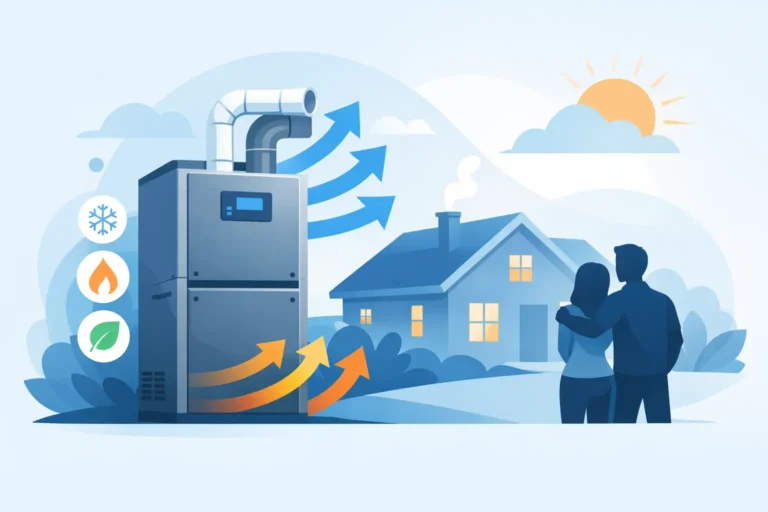
High Efficiency Furnace Review for Homeowners
A high efficiency furnace review should answer more than whether a unit has a high AFUE number. For homeowners in Turlock, Ceres, Denair, and nearby Central Valley communities, the better question is whether the furnace will deliver dependable comfort, reasonable operating costs, and a worthwhile return for your particular home.
A 95% or 96% efficient furnace can be an excellent investment. But it is not automatically the right answer for every house, budget, or existing duct system. The quality of the installation, the condition of the ducts, the thermostat setup, and the way your family uses the home all affect the result.
What Makes a Furnace High Efficiency?
Furnace efficiency is measured by AFUE, or Annual Fuel Utilization Efficiency. This number estimates how much of the fuel a furnace turns into usable heat over a typical year. An 80% AFUE furnace converts about 80 cents of every fuel dollar into heat, while the remaining amount is lost through the venting process.
A furnace with a 95% AFUE rating converts about 95% of the fuel it uses into heat. The difference may sound small, but it can matter over many heating seasons, especially when replacing an older furnace that has lost performance with age.
High efficiency gas furnaces usually achieve that rating with a secondary heat exchanger. Instead of sending more heat out through the flue, the furnace captures additional heat from the exhaust gases. Because that exhaust is cooler, these systems typically use plastic vent pipes rather than a traditional metal flue.
That design is efficient, but it also means installation details matter. Proper venting, condensate drainage, gas pressure, airflow, and electrical connections are not optional extras. They are part of what allows the equipment to operate safely and reach its stated efficiency.
High Efficiency Furnace Review: 80% vs. 95%+ AFUE
For many California homeowners, the decision comes down to an 80% furnace versus a high efficiency model rated around 95% to 97% AFUE. Neither choice is universally better.
An 80% furnace often has a lower upfront equipment and installation cost. In a home with mild winter heating needs, that lower initial cost can be appealing. It may also be a practical choice when venting limitations make a condensing furnace installation more complicated.
A 95%+ furnace costs more up front, but it uses less gas to provide the same amount of heat. It can be especially worthwhile for homeowners who plan to stay in the home for many years, have high winter gas bills, or want to pair the replacement with improvements such as duct sealing, insulation, or a smart thermostat.
The payback period depends on fuel costs, how much you heat the home, the condition of the old furnace, and the price difference between systems. Central California winters are generally milder than those in colder parts of the country, so savings alone may not justify the top efficiency rating for every household. Comfort, quieter operation, and better airflow can still make a higher-end system a sensible choice.
Comfort Features Matter as Much as AFUE
AFUE tells you about fuel efficiency. It does not tell the full story about comfort.
Many high efficiency furnaces are available with two-stage or modulating gas valves. A single-stage furnace is either on at full capacity or off. A two-stage model can run at a lower setting much of the time, then increase output when the weather is colder. A modulating furnace can make smaller adjustments to better match the home’s heating demand.
These features can reduce temperature swings and help the house feel more even from room to room. Rather than delivering a short blast of hot air, the furnace can run longer at a lower output. Longer, gentler cycles are often quieter and can improve the circulation of filtered air.
Variable-speed blower motors can make a difference, too. They use less electricity than older standard blower motors and can provide more controlled airflow. When matched correctly with your air conditioner or heat pump, they may help support better cooling performance during our long warm seasons as well.
Still, more features are not always the best value. A basic, properly sized 95% furnace may be a better fit than a premium modulating model if the home has major duct leaks, poor attic insulation, or rooms that need airflow corrections first. Addressing those issues can protect the investment and often improves comfort right away.
The Installation Can Make or Break Efficiency
A new furnace cannot fix every comfort problem by itself. If the system is oversized, it may short cycle, turning on and off too often. This can reduce comfort, add wear to components, and keep the furnace from operating as efficiently as it should.
If it is undersized, it may run constantly during colder weather and still struggle to keep up. Proper sizing should be based on the home itself, including square footage, insulation levels, window exposure, ductwork, ceiling height, and other real-world conditions. Replacing the old unit with the same size is not always the right approach.
Ductwork deserves attention during any furnace replacement. Leaky, undersized, disconnected, or poorly designed ducts can waste heated air before it reaches the rooms where your family needs it. Restricted return air can also put unnecessary strain on the blower and heat exchanger.
A dependable contractor should evaluate the entire system, not just recommend the biggest furnace available. That includes checking the gas line, electrical service, venting route, drain location, filter setup, and thermostat compatibility. It is the practical work behind the equipment that supports safe, efficient operation for years to come.
Costs to Expect Beyond the Furnace Price
When comparing estimates, look beyond the model number and headline price. A complete furnace replacement may include removing the old unit, modifying duct transitions, installing new venting, adding a condensate pump or drain, updating the thermostat, and bringing the installation into compliance with current requirements.
A high efficiency system may also require changes to its venting path. In some homes, that is straightforward. In others, routing intake and exhaust pipes, managing drainage, or working around structural features adds labor and cost.
Ask what is included in the estimate and what may be treated as an additional charge. A clear proposal should identify the furnace efficiency rating, warranty information, major installation work, and any recommended duct or airflow repairs. The lowest number on paper is not always the lowest long-term cost if important work has been left out.
When a High Efficiency Furnace Is a Smart Choice
A high efficiency furnace is often a strong fit when your current furnace is 15 to 20 years old, repair needs are increasing, or heating bills have become difficult to manage. It can also make sense when you are already planning home improvements that reduce heat loss, such as attic insulation or window upgrades.
It is particularly attractive for homeowners who want a quieter system, steadier temperatures, and lower gas use over time. For rental property owners and small businesses, reliable operation and fewer comfort complaints can also carry real value.
On the other hand, an 80% furnace may still be a reasonable option if budget is the main concern, the home has limited heating demand, or converting the venting system would require extensive work. An honest recommendation should explain both options without pressuring you into features you will not benefit from.
Questions to Ask Before You Approve an Estimate
Before choosing a furnace, ask how the system was sized and whether the contractor inspected your ducts and return airflow. Find out whether the quoted price includes venting, permits where required, thermostat work, startup testing, and removal of the old equipment.
It is also worth asking about maintenance. Even the best furnace needs a clean filter, proper airflow, annual inspection, and prompt attention when something does not sound or operate normally. Regular service helps protect the heat exchanger, burners, blower, and safety controls that keep the system working properly.
Mel's Heat & Air Inc. has served local homes and businesses since 1989 with a straightforward approach: recommend what the property needs, explain the options clearly, and install equipment built for dependable long-term performance. A free estimate on a new installation gives you the space to compare choices without guessing.
The right furnace should fit your home as well as your budget. Choose efficiency that makes sense, insist on careful installation, and give the system the maintenance it needs to keep your family comfortable when the temperature drops.
When dust settles on furniture a day after cleaning, allergy symptoms flare up indoors, or certain rooms always feel stuffy, a portable purifier may not be enough. The best air purifiers for HVAC systems work through the equipment already moving air through your home, treating more of the house without adding a separate machine to every room.
For homeowners in Turlock, Ceres, Denair, and the surrounding Central Valley, indoor air quality is not just a winter concern. Dry, dusty conditions, seasonal pollen, smoke, pets, and day-to-day household particles can all make their way indoors. The right solution depends on what is actually in the air, how your HVAC system is set up, and how much maintenance you are willing to take on.
What Makes an HVAC Air Purifier a Good Choice?
A whole-home air cleaner is installed in or near your return ductwork, so it can clean air as it cycles through the heating and cooling system. Unlike a portable purifier that handles one room at a time, an HVAC-compatible option can help improve air quality across the home whenever the system fan runs.
The best choice is not always the unit with the most features. It should fit your ductwork, airflow, existing equipment, and household needs without creating an unnecessary restriction that makes the system work harder. A properly sized air cleaner should support comfort and cleaner air, not reduce airflow or lead to avoidable repairs.
For most homes, the main options are high-efficiency media filters, electronic air cleaners, UV treatment systems, and specialized purification equipment. Each has a different job.
Best Air Purifiers for HVAC: The Main Options
High-efficiency media air cleaners
For many households, a whole-home media air cleaner is the most practical starting point. These systems use a deep, pleated filter cabinet installed alongside the HVAC equipment. Compared with a standard 1-inch filter, a media filter has much more surface area, allowing it to capture more dust, pollen, pet dander, lint, and other airborne particles while maintaining reasonable airflow when properly selected.
Media air cleaners are a strong fit for families dealing with seasonal allergies, pet hair, visible dust, or general air-quality concerns. They are also simple to maintain. Depending on the filter type, household conditions, and how often the system runs, replacement is often needed every six to 12 months rather than every month.
Filter efficiency matters, but higher is not automatically better. A very restrictive filter can put extra strain on an older system or ductwork that was not designed for it. A qualified HVAC technician can check static pressure and recommend a filter rating that improves filtration without compromising system performance.
Electronic air cleaners
Electronic air cleaners use electrically charged collection plates to capture very small particles. They can be effective for fine dust, smoke particles, and some allergens, making them worth considering in homes where those concerns are a priority.
The trade-off is maintenance. The collector cells need regular cleaning to keep working properly. If they are neglected, performance drops, and homeowners may notice odor or airflow concerns. These units are best for people who are comfortable following a maintenance schedule or arranging routine service.
Not every electronic cleaner is the same, and some designs can create trace amounts of ozone. That is why the equipment should be selected carefully and installed by a professional who can explain how it operates and what upkeep it requires.
UV lights for HVAC systems
UV lights are often called air purifiers, but they do a different job from a filter. A UV system is designed to help control microbial growth on indoor coils, drain pans, and other damp areas inside the HVAC equipment. This can be helpful where moisture and organic buildup contribute to odors or reduced coil efficiency.
UV lights do not replace a good filter. They do not collect dust, pet dander, pollen, or larger particles from the air. In the right system, they can be a useful addition to a media air cleaner, especially for households concerned about musty smells or coil cleanliness.
Bulbs typically require replacement on a regular schedule, commonly once per year, even if they still appear to be glowing. Their germicidal output decreases over time, so proper maintenance is part of getting the benefit.
Advanced whole-home purification systems
Some whole-home purification products combine filtration with technology designed to address particles, odors, and certain airborne contaminants. These systems can make sense for homes with heavier smoke exposure, persistent odors, or residents with specific sensitivity concerns.
This category deserves an honest conversation before installation. Performance claims vary widely from one product to another, and no air-cleaning device can make up for major duct leaks, a dirty evaporator coil, poor ventilation, mold growth, or an HVAC system that is not operating correctly. The right product should solve a clear problem, not add expense because it sounds impressive.
Match the Equipment to the Problem
Before choosing an air purifier for your HVAC system, identify what you are trying to improve. If the issue is dust, pollen, pet dander, or everyday particles, a quality media air cleaner is often the most dependable value. If odors or recurring moisture around the indoor coil are the concern, UV treatment may be a worthwhile addition. If smoke or fine particles are a frequent issue, a combination approach may be appropriate.
It also helps to look beyond the purifier itself. Leaky return ducts can pull dusty attic or crawlspace air into the system. A damaged filter rack can allow air to bypass the filter. An oversized or undersized HVAC system can affect humidity and comfort. These problems should be corrected first or addressed alongside the air-quality upgrade.
What to Check Before Installing a Whole-Home Air Cleaner
A good HVAC air purifier installation starts with the system, not the product box. Your contractor should inspect the available return-air space, duct condition, filter location, blower capacity, and current static pressure. This is especially important in older homes, where a new cabinet or duct modification may be needed for proper fit and service access.
Ask how often the filter, bulb, cells, or other components will need attention. A system that is easy to maintain is usually the system that keeps performing. Also ask whether the recommended equipment is designed for your specific furnace, heat pump, or air handler setup.
For businesses, the same principles apply, but the stakes can be higher. Offices, retail spaces, and other commercial properties need air-quality equipment that supports occupancy, comfort, and operating hours without creating excessive maintenance demands or interfering with required airflow.
Don’t Overlook Basic HVAC Maintenance
Even the best whole-home air cleaner cannot perform at its best when the rest of the system is neglected. Replacing filters on schedule, keeping supply and return vents open, maintaining a clean indoor coil, and having ducts inspected when dust or comfort problems persist all make a difference.
A maintenance visit is also a practical time to discuss indoor air quality. A technician can see whether your current filter is too restrictive, whether air is bypassing it, and whether a more complete solution is justified. That approach is usually more cost-effective than guessing at upgrades one at a time.
Mel's Heat & Air Inc. has served Central California families and businesses since 1989, and our approach is simple: recommend the equipment that fits the problem and the system, not the most expensive option. Cleaner indoor air starts with a system that is properly maintained, properly sized, and built to move air the way it should.
If your home feels dusty, stale, or uncomfortable even when the HVAC system is running, have the system and ductwork checked before choosing a purifier. A clear diagnosis makes it easier to invest in an air-quality solution that delivers real, lasting comfort.
A Central Valley attic can feel like an oven by midafternoon. When that heat pushes down through the ceiling, your air conditioner has to work longer to keep living spaces comfortable. This attic insulation upgrade guide explains how to tell when insulation is holding your home back, what a proper upgrade involves, and when it makes sense to bring in a professional.
Why attic insulation matters in Turlock-area homes
Insulation is not just a winter comfort upgrade. Around Turlock, Ceres, Denair, and nearby communities, it is often one of the most practical ways to reduce summer heat gain. A well-insulated attic slows the transfer of heat through the ceiling, helping your HVAC system maintain the temperature you set without running nonstop.
It also helps during colder nights and foggy winter mornings. Warm indoor air stays where it belongs, rooms feel more even, and your heating system does not have to make up for as much heat loss. The result can be better year-round comfort, less strain on heating and cooling equipment, and more predictable utility bills.
The key is that insulation must be installed correctly. Simply adding more material over an attic with air leaks, moisture problems, or damaged ductwork can leave much of the benefit on the table.
Signs your attic may need an upgrade
The clearest warning sign is a home that is hard to keep comfortable. If upstairs bedrooms run hot in summer, certain rooms are chilly in winter, or the thermostat seems to trigger frequent system cycles, the attic is worth checking.
Take a look at the insulation itself if you can do so safely. Older fiberglass insulation may be compressed, uneven, dirty, or sitting below the tops of ceiling joists. You may also notice gaps around attic access hatches, recessed light fixtures, plumbing penetrations, or wiring openings. These small gaps allow conditioned air to escape and outdoor heat to enter.
High energy bills can be another clue, especially when your HVAC system has been serviced and appears to be operating properly. Insulation is not always the only cause. Leaky ducts, an aging air conditioner, poor window performance, and thermostat issues can create similar symptoms. That is why an honest evaluation should look at the home as a complete comfort system rather than treating insulation as a one-size-fits-all answer.
Start with air sealing, not just more insulation
Before new insulation goes in, air leaks should be addressed. Warm attic air can find its way into the home through openings around ceiling fixtures, top plates, plumbing stacks, exhaust fan housings, and attic access doors. In winter, indoor air can escape through those same areas.
Air sealing helps insulation perform as intended. It can also reduce dust movement and make the home feel less drafty. Common work may include sealing small penetrations, weatherstripping the attic hatch, and making sure bathroom or kitchen exhaust ducts vent outside rather than into the attic.
This step needs care. Attics contain electrical wiring, heat-producing fixtures, combustion venting, and ventilation pathways that should not be blocked. A professional can identify where sealing is appropriate and where clearance or safety requirements apply.
Choosing the right insulation type and R-value
R-value measures how well insulation resists heat flow. Higher R-values provide greater resistance, but the best target depends on your existing insulation, attic layout, local climate, budget, and whether the attic has unusual conditions such as limited access or installed equipment.
For many Central California homes, attic insulation recommendations commonly fall in the R-38 to R-60 range. That does not mean every home needs a complete tear-out or the highest possible amount. If existing insulation is dry, clean, and in good condition, it may be possible to air seal and add material to reach a more effective level. If it is compacted, contaminated, wet, or damaged by pests, removal may be the smarter long-term choice.
Blown-in insulation
Blown-in fiberglass or cellulose works well for many open attic floors. It fills around framing and can create a more consistent blanket than older batts that have shifted over time. Blown-in material is often a practical option when adding depth over existing insulation.
Cellulose can offer strong coverage, but it should stay dry and requires careful installation around heat sources and attic details. Fiberglass is lightweight and moisture resistant, though it still needs protection from roof leaks and condensation. The right selection comes down to the condition of the attic and the installation plan, not a sales pitch for one material.
Fiberglass batts
Batts can be effective in attics with regular framing and clear access. They need to fit snugly without being compressed, folded, or left with gaps. Poorly fitted batts are a common reason an attic appears insulated but does not deliver the expected comfort improvement.
Batts can also be useful for specific areas that need detail work. They are not always the best choice for a cluttered attic with lots of obstructions, wiring, or uneven spaces.
Spray foam considerations
Spray foam is sometimes used to insulate roof decks and create a conditioned attic space. It can be useful in certain home designs, especially where ducts are located in the attic. However, it costs more, changes how the attic is ventilated, and requires a well-planned approach to moisture control and combustion safety.
It is not automatically the right choice for every Central Valley home. In many cases, air sealing the ceiling plane, improving attic-floor insulation, and repairing duct leaks provide excellent results at a more manageable cost.
Do not overlook attic ventilation and ductwork
A hot attic is normal in summer, but it should still be able to release excess heat and moisture through a balanced ventilation system. Soffit vents, ridge vents, gable vents, and other components must work together. Adding insulation should not block intake vents at the eaves.
Ventilation will not replace insulation, and insulation will not correct a roof leak. Both need to be handled properly. If you see staining, wet insulation, mold-like growth, or rusted metal in the attic, find the moisture source before installing new material.
Ductwork deserves attention too. Many homes have supply and return ducts running through unconditioned attics. Leaky, disconnected, or poorly insulated ducts can waste a significant amount of the cooled or heated air your system produces. An insulation project is a good time to inspect duct connections, insulation wraps, and signs of air loss.
What to expect from a professional insulation assessment
A useful assessment begins with questions about comfort, energy use, room temperatures, and the age of the home. The attic should then be inspected for insulation depth, exposed gaps, moisture, pests, ventilation, and duct condition. A thorough contractor will explain what they found in plain language and separate urgent repairs from optional improvements.
At Mel's Heat & Air Inc., the goal is to recommend work that supports long-term comfort and system performance, not to sell homeowners services they do not need. For some homes, the best answer is a focused air-sealing and insulation addition. For others, damaged material needs to come out first, or duct repairs should be completed before insulation is installed.
Ask for a clear scope of work. It should explain whether old insulation will remain or be removed, what areas will be sealed, the insulation type and target R-value, how attic access will be handled, and whether ventilation or duct repairs are included. A good estimate makes it easier to compare options fairly.
A practical attic insulation upgrade guide for homeowners
Plan the project around the condition of the attic, not just the price per bag of insulation. First, resolve roof leaks, pest activity, or moisture issues. Next, seal accessible air leaks and correct unsafe conditions. Then repair duct problems and verify that attic ventilation will remain open. Finally, install enough insulation for consistent coverage at the recommended depth.
If you are considering DIY work, be realistic about the attic environment. Summer temperatures are extreme, footing can be difficult, and improper work around wiring, vents, or recessed lights can create safety issues. Small tasks such as weatherstripping an attic hatch may be manageable, but larger projects often benefit from experienced installation.
An attic upgrade should make daily life easier, not become another project that leaves loose ends behind. When the attic, ductwork, and HVAC system are working together, your home has a better chance of staying comfortable through the Central Valley heat without asking more than necessary from your equipment.
A thermostat can say 72 degrees while the back bedroom still feels stuffy, the hallway feels chilly, and the AC seems to run longer than it should. In many Central Valley homes, the problem is not the thermostat or even the air conditioner. It is the ductwork. The benefits of duct sealing start with getting the heated and cooled air you already pay for to the rooms where it belongs.
Ducts are easy to overlook because most of them are hidden in attics, crawl spaces, walls, or above ceilings. But small gaps at joints, loose connections, torn flexible duct, and aging tape can waste a surprising amount of conditioned air. During a Turlock summer, that means cooled air may be escaping into a hot attic instead of reaching your living room.
Why Duct Leaks Cause Bigger Comfort Problems
Your HVAC system relies on a closed path. It pulls air from the home through return ducts, conditions it at the furnace or air handler, and sends it back through supply ducts. When that path leaks, the system has to work harder to maintain the temperature you selected.
Supply-side leaks let conditioned air escape before it reaches a room. Return-side leaks can pull dusty, unconditioned attic or crawl-space air into the system. Either issue can make rooms uneven, increase run times, and leave homeowners wondering why a system that is still running does not feel like it is keeping up.
This is especially noticeable in Central California, where attic temperatures can climb quickly and cooling systems carry a heavy load for long stretches of the year. A small duct issue that seems minor in mild weather may become much more obvious during a heat wave.
Benefits of Duct Sealing for Your Home or Business
Professional duct sealing is not about selling equipment that a customer does not need. It is a practical repair that addresses air loss in the distribution system. When the ductwork is in otherwise serviceable condition, sealing leaks can improve how the entire HVAC system performs.
Lower Energy Waste
One of the clearest benefits is reduced energy waste. When cooled or heated air leaks into an attic, crawl space, or unoccupied area, the HVAC system must run longer to satisfy the thermostat. Sealing accessible leaks helps keep more conditioned air inside the duct system and moving toward occupied rooms.
The actual savings depend on the size and location of the leaks, the condition of the equipment, insulation levels, thermostat settings, and how the building is used. Duct sealing is not a promise of a specific utility-bill reduction. Still, for homes and small businesses with significant leakage, it can eliminate a source of unnecessary system runtime.
More Even Temperatures From Room to Room
A hot upstairs bedroom, a cold office, or a family room that never feels comfortable can have several causes. Duct leakage is one of them. Air may be escaping before it reaches the rooms at the end of a duct run, particularly if the run passes through a hot attic.
Sealing and reconnecting ductwork can help improve airflow balance. It may not solve every hot-and-cold spot on its own. An undersized system, poor attic insulation, inadequate return air, sun exposure, or blocked registers can also affect comfort. A qualified technician should look at the full picture before recommending a fix.
Better Indoor Air Quality Support
Leaky return ducts can draw in air from spaces that were never meant to be part of your breathing air. Attics and crawl spaces can contain dust, insulation particles, odors, and other airborne debris. Sealing return leaks helps reduce the chance that this unfiltered air gets pulled into the HVAC system and circulated through the building.
Duct sealing does not replace regular filter changes, proper ventilation, or an indoor air quality solution when one is needed. It does, however, help the filtration system do its job with the air it was designed to handle.
Less Strain on Heating and Cooling Equipment
Longer run times mean more work for compressors, blower motors, furnaces, and other components. Reducing duct leakage can help the system deliver air more efficiently, which may reduce unnecessary strain over time.
That does not mean duct sealing can make an aging air conditioner new again or correct neglected maintenance. It is one part of protecting system longevity. Regular service, clean filters, sound electrical components, and proper refrigerant performance still matter just as much.
A Quieter, More Dependable System
Loose duct connections and poor airflow can contribute to whistling, rattling, or air noise at certain registers. Properly secured and sealed ducts can reduce some of those sounds while helping airflow move more predictably through the system.
For a small business, dependable airflow matters beyond comfort. Uneven temperatures can affect employees, customers, tenants, and equipment rooms. Addressing duct problems early may help prevent a comfort complaint from turning into a larger disruption during peak cooling or heating season.
Signs Your Ductwork May Need Attention
Duct leaks are hidden, but the symptoms often show up in everyday use. It is worth scheduling an inspection if you notice several of the following issues:
- Rooms that stay warmer or cooler than the rest of the building
- High utility bills without a clear change in how the system is used
- Excess dust around vents or frequent filter loading
- HVAC equipment that runs for long periods without delivering steady comfort
- Visible disconnected, crushed, torn, or sagging ductwork in an attic or crawl space
A musty or dusty smell when the system starts can also point to a return-air issue, although odors can come from other sources. A professional inspection is the best way to avoid guessing.
What Professional Duct Sealing Involves
A proper duct repair begins with an assessment, not a quick roll of tape. A technician checks accessible duct runs, connections, boots, plenums, return ducts, and areas where damage or separation is common. They may also look for airflow restrictions, insulation problems, or signs that the duct design itself is contributing to comfort issues.
Depending on the condition of the system, the repair may involve reconnecting separated duct sections, sealing joints with appropriate materials, repairing damaged flexible duct, securing supports, and insulating ducts where needed. Standard household tape is not a long-term duct repair. Heat, dust, and age can cause it to fail, which is why professional-grade sealing materials and correct installation matter.
Some ductwork is too deteriorated, undersized, or poorly designed for simple sealing to be the right answer. In that case, an honest recommendation may be targeted duct replacement or modifications instead. The goal should be a repair that makes sense for the building, not the biggest possible job.
Duct Sealing and Attic Insulation Work Better Together
In many Central Valley homes, ducts run through an unconditioned attic. That puts your cooled air next to extreme summer heat and your heated air next to cold winter air. Sealing leaks helps keep air inside the duct, while attic insulation helps reduce the temperature difference the ducts must fight against.
These upgrades often complement each other, but they are not identical. If ducts are disconnected or badly damaged, insulation alone will not fix the airflow problem. If the attic has very little insulation, sealing ducts may improve performance but still leave the system working against excessive heat gain. Looking at both areas provides a more practical path to lasting comfort.
A Local Repair That Can Make a Daily Difference
For homeowners in Turlock, Ceres, Denair, and nearby communities, duct sealing is often most valuable before the hottest days arrive. It can also be a smart step for property owners preparing a rental, improving an older home, or trying to get more life from equipment that is otherwise operating well.
Mel's Heat & Air Inc. has served local homes and businesses since 1989, with a focus on straightforward recommendations and quality workmanship. If your system is running hard but comfort is still uneven, a duct inspection can help identify whether air leaks are part of the problem.
Comfort should not depend on closing doors, avoiding certain rooms, or turning the thermostat lower than necessary. A well-sealed duct system gives your heating and cooling equipment a fair chance to do the job it was built to do.
A furnace rarely picks a convenient time to quit. It may start making a new noise on a cold Central Valley morning, run longer than usual, or stop producing heat when your family needs it most. When that happens, the question is not simply whether you can get it running again. It is whether you should repair or replace furnace equipment for the better long-term value.
The honest answer depends on the condition of your system, not a one-size-fits-all rule. A quality repair can give a well-maintained furnace several more dependable years. On the other hand, repeatedly investing in an aging unit can cost more than putting that money toward safer, more efficient equipment. The right decision starts with a careful diagnosis and a clear look at the numbers.
Repair or Replace Furnace: Start With Its Age
Age is one of the clearest factors in a furnace decision. Many furnaces provide about 15 to 20 years of service when they receive regular maintenance and are installed properly. Some last longer, while others wear out earlier because of heavy use, neglected filters, duct problems, or years of deferred service.
If your furnace is under 10 years old and has generally been reliable, repair is often the sensible option. Parts such as igniters, flame sensors, capacitors, thermostats, and blower components can fail without meaning the entire system is finished. A professional repair may restore safe, efficient operation at a reasonable cost.
Once a furnace reaches 15 years or more, the replacement conversation deserves more attention, especially when repairs become frequent or expensive. Older equipment can still be repairable, but a repair should make financial sense for the time it is likely to buy you. Spending a significant amount on an older furnace that may need another major repair next season is rarely a comfortable position for a homeowner.
Look at the Repair Cost, Not Just Today’s Bill
A low-cost repair is usually easy to justify. A dirty flame sensor, failed igniter, or worn belt should not automatically lead to a replacement recommendation. The goal should be to fix what is wrong and help you get the most useful life from equipment that is still in good shape.
The decision changes when a repair involves a major component, such as a heat exchanger, control board, blower motor, or inducer motor. These repairs can be worthwhile on a newer furnace, particularly if the rest of the system is in strong condition. On an older unit, however, a major repair can represent a large percentage of the cost of new equipment.
A practical way to think about it is this: if the repair is costly and the furnace is near the end of its expected service life, ask how many reliable years that repair is likely to provide. Then compare that answer with the value of a new system warranty, improved efficiency, and fewer surprise breakdowns. A trustworthy technician should walk you through both options without pressuring you toward equipment you do not need.
Safety Problems Change the Conversation
Not every furnace issue is about comfort or operating cost. Some concerns should be treated as safety matters first.
A cracked heat exchanger is one of the most serious examples. The heat exchanger separates combustion gases from the air moving through your home. If it is damaged, the furnace may need to be shut down and replaced rather than repaired. Persistent gas odors, soot around the unit, a yellow burner flame, frequent carbon monoxide detector alerts, or signs of corrosion also call for prompt professional attention.
Do not attempt to diagnose gas or combustion problems on your own. Turn off the system if you suspect a gas leak, leave the area if needed, and contact a qualified HVAC professional or emergency service provider. Keeping working carbon monoxide detectors near sleeping areas and having your furnace inspected regularly are simple steps that protect your household.
Repeated Breakdowns Are a Real Cost
One repair does not mean your furnace is failing. Two or three repairs in a short period may tell a different story.
Frequent service calls create costs that go beyond the invoice. There is the time away from work, the inconvenience of a cold house, and the uncertainty of wondering whether the system will make it through the next cold spell. For rental property owners and small businesses, inconsistent heat can also affect tenants, employees, and customers.
Keep a simple record of furnace repairs, including the date, issue, and cost. Patterns become easier to see when they are written down. If the same problem returns or several different parts begin failing as the system ages, replacement may offer better value and greater peace of mind.
Pay Attention to Comfort and Energy Use
A furnace can still produce heat and yet no longer heat your home well. Cold bedrooms, rooms that heat unevenly, weak airflow, loud operation, and long run times are signs that deserve attention. The furnace may be part of the issue, but it is not always the whole story.
Leaky or poorly designed ductwork, insufficient attic insulation, clogged filters, thermostat problems, and poor return-air flow can all make a heating system work harder. Replacing a furnace without addressing these issues may leave you with a new unit that still struggles to keep the home comfortable.
That is why a complete evaluation matters. A technician should consider the equipment, duct system, airflow, and size of the home before recommending replacement. Proper sizing is especially important. An oversized furnace can cycle too often, while an undersized furnace may run constantly without keeping up. Neither situation delivers the comfort or efficiency you are paying for.
Higher utility bills can also be part of the decision. If heating costs have risen sharply and there has been no major change in how you use your home, an aging furnace may be losing efficiency. Newer high-efficiency equipment can reduce wasted energy, but the potential savings depend on your current system, home condition, utility rates, and installation quality. Savings should be discussed realistically, not promised as a guarantee.
When Repair Usually Makes Sense
Repair is often the right call when the furnace is relatively young, has been maintained, and the problem is isolated. It also makes sense when the repair is modest compared with replacement cost and there are no safety concerns.
For example, a 7-year-old furnace with a failed igniter may have many productive years ahead. Replacing the igniter and completing a maintenance check is usually far more practical than replacing the entire unit. The same can be true for a thermostat issue or a minor electrical repair.
Regular maintenance helps make this choice easier. During a heating service visit, technicians can inspect burners, verify safe operation, check airflow, clean necessary components, and catch small concerns before they turn into a no-heat emergency.
When Furnace Replacement Is the Better Investment
Replacement becomes more reasonable when the furnace is old, unreliable, unsafe, or costly to keep alive. It may also be the better choice when repairs are needed repeatedly, replacement parts are difficult to obtain, or the system can no longer provide dependable comfort.
A new installation is also an opportunity to correct long-standing problems. If your home has uneven temperatures, poor airflow, aging ducts, or an outdated thermostat, the replacement process can address more than the furnace itself. The result should be a system designed around your home’s actual needs, not simply the same equipment size that was installed years ago.
For property owners planning to stay in the home, replacement can bring stability and fewer unexpected expenses. For those preparing to sell, a reliable heating system may also remove a major concern during inspection. Still, replacement should be based on the condition of the equipment and your plans, not fear or sales pressure.
Get a Clear Diagnosis Before You Decide
Before approving a large repair or purchasing a new furnace, ask for a plain-language explanation of the issue. You should understand what failed, whether the repair solves the underlying problem, what condition the rest of the system is in, and why replacement is or is not being recommended.
It is also reasonable to ask about repair warranties, equipment warranties, efficiency options, installation scope, and whether ductwork or insulation could be affecting performance. A complete estimate helps you compare choices fairly instead of making a rushed decision during an uncomfortable evening.
Mel's Heat & Air has served local families and businesses since 1989 with the belief that the best recommendation is the one that fits the customer, not the one with the biggest price tag. Whether your furnace needs a straightforward repair or it is time to plan a replacement, a professional inspection can give you the facts needed to move forward with confidence.
If your heat is unreliable, noisy, or not keeping up, do not wait for a complete breakdown to find out where you stand. A timely evaluation can protect your comfort now and help you make a practical decision before the next cold night puts you under pressure.
A furnace rarely quits at a convenient time. It usually shows its age on the first cold night of the season, when your home needs dependable heat and every HVAC company is receiving urgent calls. The best time for furnace replacement is usually before that moment - when you can compare options, schedule around your life, and make a decision based on value instead of pressure.
For homeowners in Turlock, Ceres, Denair, and nearby Central Valley communities, the timing can be a little different than it is in colder parts of the country. Our winters are generally milder, but chilly mornings and damp evenings still make a reliable heating system matter. Planning ahead can protect your comfort, help control energy costs, and reduce the chance of an emergency replacement during a busy season.
When Is the Best Time for Furnace Replacement?
For most homes, spring and early fall are the most practical times to replace a furnace. HVAC schedules are often less crowded after the heating season ends and before cooling season reaches its peak. That can give you more flexibility in choosing an installation date and more time to consider the system that fits your home.
Early fall is especially popular because homeowners want their heating checked before winter. It is a smart window, but waiting until the first cold spell can still create a rush. If your furnace is old or becoming unreliable, scheduling replacement in late summer or the beginning of fall can get the work done before you need to run the heat every day.
Spring can be equally useful. Once you are no longer relying on the furnace each morning, installation can be scheduled with less disruption. It also gives you time to address related issues, such as aging ductwork, poor attic insulation, or a thermostat that is not keeping temperatures consistent.
That said, there is no need to wait for the “perfect” season if your current furnace is unsafe, failing often, or costing too much to operate. A planned replacement is ideal, but a necessary replacement should not be postponed simply because the calendar says it is busy.
Why Off-Season Furnace Replacement Makes Sense
Replacing a furnace during a moderate-weather period gives you breathing room. You can ask questions, review a written estimate, and consider efficiency, warranty coverage, and installation quality without worrying about getting heat back on that same day.
A new furnace is not a one-size-fits-all purchase. The right unit depends on the square footage of your home, insulation levels, duct design, number of windows, airflow needs, and how your family uses different rooms. An oversized furnace can heat too quickly and cycle on and off too often. An undersized one may struggle to keep up on colder days. Proper sizing and installation matter just as much as the equipment itself.
Off-season planning also makes it easier to bundle work when it makes sense. For example, if ducts are leaking, damaged, or poorly balanced, addressing them during a furnace installation can improve comfort throughout the home. If your thermostat is outdated, a smart thermostat may help you manage temperatures and energy use more effectively. These are not automatic add-ons for every job, but they are worth discussing when they solve a real problem.
Signs It Is Time to Plan a Replacement
Age alone does not mean a furnace must be replaced. Well-maintained equipment can last for many years, while neglected equipment may fail sooner. Still, once a furnace is around 15 to 20 years old, it is wise to start planning and budgeting for replacement - especially if repairs are becoming more frequent.
Pay attention to the pattern, not just one bad day. A single repair may be reasonable. Repeated breakdowns, uneven heating, and rising utility bills can point to a system that is nearing the end of its useful life.
Consider scheduling a replacement estimate if you notice several of these issues:
- The furnace needs repairs more than once in a heating season.
- Some rooms stay cold while others become too warm.
- Your energy bills are climbing without a clear change in usage.
- The system runs loudly, cycles frequently, or takes a long time to heat the house.
- Your furnace is nearing two decades old and major parts are starting to fail.
- You see rust, corrosion, water around the unit, or signs of a cracked heat exchanger.
A cracked heat exchanger, gas smell, suspected carbon monoxide issue, or furnace that will not operate safely is not a wait-and-see situation. Turn the system off if you believe there may be a safety concern and have a qualified HVAC professional inspect it promptly.
Repair or Replace: Make the Call With Real Numbers
Homeowners often ask whether they should repair an aging furnace one more time or replace it. The honest answer depends on the repair, the condition of the equipment, and what you expect from the home over the next several years.
If the furnace is relatively young, has been maintained, and needs a modest repair, fixing it is often the sensible choice. Replacing equipment too early does not serve the homeowner. On the other hand, a major repair on an older furnace may only delay the next problem while leaving you with higher operating costs and limited reliability.
Ask for a clear explanation of what has failed, what the repair will accomplish, and whether other components show signs of wear. Compare the repair cost with the age and expected remaining service life of the furnace. It can also help to think about your plans for the property. If you expect to stay in the home for years, better efficiency and dependable performance may carry more value. If you are preparing to sell, the decision may be different.
A trustworthy contractor should be willing to explain both paths. At Mel's Heat & Air Inc., the goal is to help local customers make a practical decision, not push a replacement when a repair is still the right answer.
Consider Your Whole Heating and Cooling System
A furnace does not work alone. It shares the home with ductwork, controls, insulation, and often an air conditioner or heat pump. Replacing only the furnace can be appropriate, but it is worth looking at how the full system is performing.
For example, an older air conditioner paired with a new furnace may continue to work, yet the combination may not offer the efficiency or reliability you want long term. In other homes, a heat pump may be worth considering because it provides both heating and cooling. Central California's climate can make heat pumps a practical option for many households, though the right choice depends on the home, electrical setup, comfort preferences, and budget.
Duct condition is another factor people often overlook. Leaks, loose connections, crushed runs, or poor return airflow can make a new furnace seem disappointing because the heated air is not reaching rooms properly. A professional evaluation can identify whether duct repair, maintenance, or airflow adjustments would improve the results of your investment.
How to Prepare for a Planned Furnace Installation
Once you decide replacement is the right move, a little preparation helps the process go smoothly. Start with an in-home evaluation rather than choosing equipment based only on the old furnace's size. Your home's needs may have changed since the last installation, particularly if you added windows, remodeled, improved insulation, or converted part of the house into living space.
Before installation day, clear a path to the furnace and remove stored items from the work area. If the unit is in an attic, garage, closet, or crawlspace, accessible work space helps the crew complete the job safely and efficiently. Ask what to expect regarding shutoff time, thermostat setup, permits if needed, and disposal of the old equipment.
After the installation, make sure you understand basic filter changes, thermostat operation, and maintenance needs. Regular service helps protect efficiency, keeps small issues from becoming major repairs, and supports a longer working life for the new system.
Do Not Let a Breakdown Set the Schedule
The best replacement date is often before your furnace makes the decision for you. If your system is aging, unreliable, or expensive to keep running, a no-pressure evaluation can give you useful information well before cold weather arrives. Planning now lets you choose dependable comfort for your home on your terms, with fewer surprises when the temperature drops.
A furnace often sits quiet for months in the Central Valley, then gets called into action on the first cold night of the season. That is when neglected filters, weak ignition parts, and dusty blower assemblies tend to make themselves known. This furnace maintenance guide helps homeowners protect their comfort, avoid preventable breakdowns, and know when a simple task should be handed to a trained technician.
Regular care does not mean taking apart your furnace or trying to repair gas components yourself. It means handling the safe, basic checks that support airflow and paying attention to changes before they become an after-hours emergency.
Start With the Filter
For most homes, the furnace filter is the single most useful maintenance item to check. A clogged filter restricts airflow, making the blower work harder and reducing the heat that reaches your rooms. It can also contribute to overheating, short cycling, higher utility bills, and unnecessary wear on the system.
Check the filter monthly during periods of regular use. Depending on the filter type, pets, household dust, and whether anyone in the home has allergies, it may need replacement every one to three months. A basic one-inch filter generally needs more frequent attention than a larger media filter.
Before removing it, turn the thermostat off. Install the new filter with the airflow arrow pointing toward the furnace or air handler. If you are unsure which size or rating is right for your system, do not assume the highest-rated filter is always best. Very dense filters can restrict airflow in equipment not designed for them. The right choice depends on your system and indoor air needs.
Keep Airflow Clear Around the House
Your furnace cannot heat a home evenly if supply vents or return grilles are blocked. Walk through the house before heating season and make sure furniture, rugs, storage bins, and curtains are not covering vents. Open supply registers in rooms you use, even if you prefer some rooms cooler than others.
Return grilles deserve the same attention. These are the larger grilles that pull household air back to the furnace. A blocked return can starve the system of airflow and make certain rooms feel uncomfortable. Vacuum visible dust from grilles carefully, but do not push debris into the ductwork.
If one room consistently stays cold while the rest of the home is comfortable, the problem may not be the furnace itself. Duct leaks, poor attic insulation, an improperly balanced system, or a thermostat location can all play a role. Closing every vent in unused rooms is usually not a reliable fix and can create pressure problems in the duct system.
Check the Thermostat Before You Blame the Furnace
When the weather changes, test your thermostat before you need heat in a hurry. Set it to Heat and raise the temperature a few degrees above the current room temperature. Within a few minutes, the furnace should begin its normal startup sequence and warm air should reach the vents.
If your thermostat uses batteries, replace them before they fail. Make sure it is set to Heat rather than Cool or Fan Only, and confirm the fan setting is on Auto for normal operation. A fan set to On will run continuously, which can make it seem as though the furnace is blowing cool air between heating cycles.
Smart thermostats can help manage schedules and energy use, but programming should match how your household actually lives. A dramatic temperature setback may save energy in some homes, while others may take so long to recover that the savings are minimal. For many Central Valley households, a modest setback while sleeping or away is a practical place to start.
Give the Furnace Area Some Breathing Room
The space around a furnace should stay clean, dry, and clear. Do not store paint, gasoline, cleaning chemicals, cardboard boxes, or other flammable materials nearby. Keep at least several feet of open space around the equipment so a technician can inspect and service it safely.
If your furnace is in a garage, attic, closet, or crawlspace, take a quick look for water stains, pest activity, loose insulation, or damaged duct connections. You do not need to touch wiring, gas lines, or internal panels. The goal is to notice conditions that deserve professional attention.
For high-efficiency furnaces, check the outdoor intake and exhaust pipes if they are accessible. Leaves, lint, nesting material, and other debris can block these pipes. Clear only loose material from the outside opening. Do not insert tools or reach far into the pipe, since damage or a deeper obstruction should be addressed by a technician.
Know Which Warning Signs Should Not Wait
Some furnace problems require prompt service, especially where gas combustion is involved. Turn the system off and call for help if you smell gas, notice a burning electrical odor, see soot around the equipment, or hear a loud bang, grinding, or repeated clicking during startup.
A yellow or flickering burner flame is another reason to schedule service. Gas furnace flames should generally be steady blue. A technician should evaluate any flame that looks yellow, unstable, or unusually large. Do not attempt to clean burners or adjust gas components yourself.
Other warning signs are less urgent but still worth addressing before they grow: frequent cycling, weak airflow, uneven heating, a sudden jump in utility costs, or a furnace that runs but never seems to satisfy the thermostat. These issues can stem from something as simple as a dirty filter, but they can also point to blower, ignition, duct, or thermostat problems.
Every home with fuel-burning equipment should have working carbon monoxide detectors. Test them according to the manufacturer instructions and replace batteries as needed. If a carbon monoxide alarm sounds, get everyone outside, call emergency services, and do not reenter until the home has been cleared.
Why Professional Furnace Maintenance Matters
A homeowner can do a great deal by changing filters and keeping vents clear, but annual professional maintenance covers the parts of the system that should not be treated as do-it-yourself projects. A qualified HVAC technician can inspect electrical connections, safety controls, burners, the heat exchanger, ignition components, blower performance, condensate drainage, venting, and overall operation.
This is not about selling equipment that is not needed. It is about catching small issues while repair options are usually simpler and less expensive. A worn ignitor, loose electrical connection, dirty flame sensor, or weak capacitor may not stop the furnace today, but it can leave a family without heat at the worst possible time.
The best timing is typically before the cooler season begins. That gives you a chance to address concerns without rushing, and it helps ensure your system is ready when nighttime temperatures drop. For landlords and business owners, planned maintenance also helps reduce disruptions for tenants, staff, and customers.
A Simple Seasonal Routine
Before the first sustained cold spell, replace or inspect the filter, test the thermostat, clear vents and returns, and make sure carbon monoxide detectors are working. Then run the furnace through a normal heating cycle. A faint dusty smell during the first run can be normal after a long idle period, but it should fade quickly.
During the season, continue checking the filter monthly and listen for new sounds. After the season, keep the area around the furnace clean and schedule service if the system showed signs of trouble. Avoid waiting until next winter if you noticed inconsistent heat, unusual cycling, or rising operating costs.
For homeowners in Turlock, Ceres, Denair, and nearby communities, Mel's Heat & Air Inc. can provide straightforward furnace service built around safe operation and long-term system performance. The right maintenance plan is not complicated: take care of the basics, do not ignore warning signs, and bring in a professional when the work involves combustion, electrical components, or the internal operation of your equipment.
A dependable furnace earns its keep quietly. A little attention before cold weather arrives gives it the best chance to stay that way.
A Central Valley home can look clean and still have air that feels dusty, stale, or irritating. Summer smoke, seasonal pollen, dry conditions, pet dander, and everyday cooking all find their way indoors. The best indoor air quality upgrades address the source of those problems instead of simply covering them up with a scented spray or a small plug-in device.
The right improvement depends on what is happening in your home, how your HVAC system is set up, and who lives there. A family managing allergies may need better filtration. A home with stuffy bedrooms may need duct repairs or fresh-air ventilation. If you are noticing dust on furniture shortly after cleaning, the issue may be leaky ductwork rather than the filter alone.
Which Indoor Air Quality Upgrades Are Worth It?
An indoor air quality upgrade should make a noticeable difference without putting unnecessary strain on your heating and cooling equipment. That is why a professional assessment matters. Not every home needs every product, and installing equipment without looking at airflow, duct condition, and system capacity can lead to disappointing results.
For most homes in Turlock, Ceres, Denair, and nearby communities, the most useful improvements fall into a few practical categories: better filtration, whole-home air cleaning, duct repair, humidity management, and controlled ventilation. These upgrades can work together, but they do different jobs.
A quality air filter captures particles moving through your HVAC system. An air cleaner can target smaller airborne particles, depending on the technology. Duct repairs prevent attic dust and unconditioned air from getting pulled into the system. Ventilation replaces stale indoor air with filtered outdoor air, while humidity control helps keep air comfortable and limits conditions that can encourage mold growth.
Start With the Air Your HVAC System Moves
Your HVAC system moves a large volume of air every day. If that air is passing through a dirty filter, poorly sealed ducts, or a neglected system, upgrading a single room air purifier may only solve part of the problem.
Use a filter your system can handle
A higher-rated filter can capture more dust, pollen, and other particles than a basic fiberglass filter. For many households, a quality pleated filter changed on schedule is one of the most affordable upgrades available. It also protects the equipment from buildup that can reduce efficiency and shorten its service life.
More filtration is not always better, though. Filters with very high resistance can restrict airflow if the system was not designed for them. Restricted airflow can make your air conditioner or furnace work harder, affect comfort, and contribute to repairs. The best choice is a filter that improves particle capture while allowing your particular system to breathe properly.
If someone in the home has allergies, asthma, or sensitivity to smoke and dust, ask an HVAC professional to recommend a filter rating that fits the equipment and your needs. Replacing it regularly matters just as much as choosing the right one. A good filter cannot help much once it is packed with dirt.
Repair leaky or damaged ducts
Ductwork is easy to forget because most of it is hidden. Yet ducts running through an attic, crawlspace, or garage can develop gaps, loose connections, crushed sections, and damaged insulation over time. Those problems waste conditioned air and can pull dust, insulation fibers, and odors into the system.
Duct repair is often one of the best indoor air quality upgrades when a home feels unusually dusty or certain rooms never seem comfortable. Properly sealed, supported ducts help deliver cleaner conditioned air where it belongs. They can also improve efficiency, reduce hot and cold spots, and take pressure off the HVAC equipment.
A duct inspection is especially worthwhile after a remodel, rodent activity, water damage, or years of attic work around the duct system. Full duct replacement is not always necessary. In many cases, targeted repairs and sealing are the honest, cost-effective answer.
Add Whole-Home Air Cleaning Where It Helps
Portable air purifiers can be useful in a bedroom, nursery, or home office. They are often a sensible option for renters or for families that want extra support in one specific room. Their limitation is coverage: a small unit cannot clean the air throughout a large house, especially with doors open and the HVAC system cycling.
Whole-home air cleaners are installed with the HVAC system and treat air as it circulates through the return duct. Depending on the equipment selected, they may help reduce airborne particles such as dust, pollen, pet dander, and smoke particles. This can be valuable during wildfire smoke events or high-pollen periods, when opening windows is not always a good option.
The trade-off is cost and compatibility. A whole-home air cleaner should be sized and installed correctly, and it should not be sold as a cure-all. It will not fix moisture behind a wall, remove a strong odor source, or solve a ventilation problem by itself. Still, paired with good filtration and routine maintenance, it can make a meaningful difference for many households.
Be cautious with air-cleaning products that make broad claims about eliminating every contaminant. Ask what the equipment is designed to capture or address, what maintenance it requires, and whether it produces anything you do not want added to your indoor air. Straight answers are more valuable than big promises.
Manage Humidity and Moisture Problems
Central California is known for dry heat, but indoor moisture problems can still develop from plumbing leaks, poor bathroom ventilation, oversized equipment, crawlspace conditions, or inadequate drainage. Too much humidity can leave rooms feeling clammy and create conditions where mold and mildew are more likely to grow. Too little humidity can contribute to dry skin, irritated sinuses, static electricity, and cracked wood furnishings.
The goal is balance, not making the home as dry as possible. Air conditioning naturally removes some moisture during cooling, but it has to run long enough to do the job. An oversized air conditioner may cool the home quickly but shut off before it removes enough humidity. That is one reason proper system sizing matters when replacing HVAC equipment.
Dehumidifiers and humidifiers can help in the right situation, but they should be selected based on the actual issue. A portable unit may be enough for a small problem area. A whole-home solution may make more sense when the concern affects the entire house. Before adding equipment, address leaks, drainage issues, or ventilation gaps that are feeding the moisture problem.
Bring in Fresh Air Without Letting Everything Else In
A tightly sealed home can be efficient, but it can also hold onto cooking odors, cleaning-product fumes, pet smells, and carbon dioxide from everyday occupancy. Fresh-air ventilation helps exchange stale indoor air for outside air in a controlled way.
This upgrade deserves a careful approach in the Central Valley. On a mild day, outdoor air may be welcome. During wildfire smoke, heavy pollen, or extreme heat, bringing in outside air without proper filtration and controls can make conditions worse. Mechanical ventilation systems can be designed to manage that exchange more effectively than opening a window and hoping for the best.
Kitchen and bathroom exhaust fans also play a role. A properly vented range hood removes cooking smoke, grease, and moisture at the source. Bathroom fans help clear humidity after showers. If either fan exhausts into an attic instead of outdoors, it can create a separate moisture and air-quality concern that should be corrected.
Do Not Overlook Maintenance and Source Control
Some of the biggest indoor air quality improvements are not glamorous. Keep return vents clear, vacuum with a well-maintained machine, use the kitchen exhaust fan when cooking, and avoid storing strong chemicals near return ducts or HVAC equipment. If a room has a persistent musty smell, visible staining, or signs of water damage, find and correct the source rather than relying on an air freshener.
Annual HVAC maintenance also supports cleaner air. A technician can inspect filters, blower components, condensate drainage, electrical connections, and overall airflow. A system that is clean and operating properly is better positioned to filter and circulate air as intended.
For homes with pets, smokers, frequent cooking, young children, or family members with respiratory concerns, maintenance intervals and filter changes may need to be more frequent. There is no one calendar that fits every household.
Choose Upgrades Based on Your Home, Not a Sales Pitch
The best plan begins with the symptoms you are noticing. Tell the technician whether the problem is dust, odors, allergy flare-ups, uneven temperatures, humidity, smoke concerns, or rooms that feel stuffy. That information helps narrow down whether the priority should be filtration, ductwork, ventilation, moisture control, or a combination of solutions.
Mel's Heat & Air Inc. has served local homeowners and businesses since 1989, with a focus on practical recommendations and long-term system performance. A careful inspection can help separate a useful upgrade from equipment you simply do not need.
Cleaner indoor air is rarely about one expensive device. It comes from paying attention to the air your system moves, the places contaminants enter, and the conditions inside your home. Start with the concern you can see or feel, then choose improvements that solve that specific problem and keep working season after season.
A Central Valley summer can turn an air conditioning problem into an urgent situation fast. Knowing the best signs of a failing compressor can help you act before a small performance issue becomes a full system shutdown, expensive repair, or uncomfortable night at home.
The compressor is often called the heart of an air conditioner or heat pump. It circulates refrigerant through the system so heat can be removed from your home or business. When it begins to fail, the equipment may still run for a while, but it will not cool properly, operate efficiently, or protect itself from further damage.
What a Compressor Problem Can Look Like
A failing compressor does not always announce itself with one obvious symptom. Many of the same warning signs can also point to an electrical issue, a refrigerant leak, a dirty outdoor coil, or a failing fan motor. That is why a professional diagnosis matters. Replacing a compressor when another part is at fault is not an honest or cost-effective solution.
Still, a few symptoms deserve prompt attention, especially when temperatures climb in Turlock, Ceres, Denair, and surrounding communities.
1. Your AC Runs but the Air Is Not Cold
If the thermostat is set correctly, the indoor blower is moving air, and the outdoor unit is running, yet the supply vents are blowing warm or only mildly cool air, the compressor may not be doing its job. A weak compressor may struggle to pressurize and move refrigerant. In some cases, it may start but fail to reach full capacity.
Before assuming the compressor is the problem, check the air filter. A severely clogged filter can restrict airflow and create comfort problems of its own. If the filter is clean and the system still cannot keep up, it is time for a technician to test the equipment.
2. The Outdoor Unit Makes Loud or Unusual Noises
Your outdoor condenser will make a steady operating sound, but it should not sound like it is grinding, banging, clanking, or screaming. A loud rattling or metal-on-metal sound can indicate worn internal compressor components. A hard-start condition may also create a brief loud noise when the system tries to turn on.
Turn the system off if you hear severe grinding, repeated banging, or a loud electrical hum without normal cooling. Continuing to run equipment that is struggling to start can place extra stress on the compressor and other electrical parts.
A Brief Click Is Different From Constant Clicking
A single click when the system starts or stops can be normal. Repeated clicking, particularly when the unit does not start, is not. It may be a failed capacitor, contactor, control issue, or compressor protection switch. These parts should be checked before anyone recommends major replacement.
3. The Circuit Breaker Trips Repeatedly
An air conditioner can trip a breaker once for several reasons, including a storm or temporary electrical issue. But a breaker that trips every time the AC starts is a warning sign that should not be ignored.
A compressor that is overheating or drawing excessive electrical current can trip the breaker to prevent damage or fire risk. Do not keep resetting the breaker and forcing the unit to run. That can damage the compressor further and may create a serious electrical hazard. Leave the unit off and have it inspected.
4. The AC Starts, Then Shuts Off Quickly
Short cycling happens when an air conditioner turns on, runs briefly, shuts off, and then repeats the process. It wastes energy, leaves rooms uncomfortable, and puts unnecessary wear on the entire system.
A compressor that is overheating may shut down on its internal safety control. But short cycling can also result from thermostat placement, low refrigerant, a dirty coil, oversized equipment, or airflow restrictions. The right repair depends on finding the actual cause, not guessing based on one symptom.
5. Your Energy Bills Rise Without a Clear Reason
Higher summer utility bills are expected when outdoor temperatures stay high. What is not normal is a sharp increase while your comfort stays the same or gets worse. A weak compressor may run longer and use more electricity just to produce less cooling.
Compare your bill with the same month last year if possible. Also consider changes in household occupancy, thermostat settings, and insulation. If nothing meaningful has changed but the system is running constantly, a service visit can identify whether the issue is the compressor, ductwork, refrigerant charge, or another efficiency problem.
6. The Outdoor Unit Shakes or Vibrates Excessively
Some vibration is normal when the compressor starts. Excessive shaking, however, can point to worn compressor mounts, loose components, or internal mechanical trouble. You may notice the unit visibly vibrating, hear nearby lines rattling, or feel more vibration through the wall than usual.
Loose parts can often be corrected before they cause bigger damage. Ignoring vibration can allow refrigerant lines, electrical connections, and other components to wear prematurely.
7. You See Signs of Refrigerant or Oil Leaks
Refrigerant itself is not always easy to see. You may notice oily residue near refrigerant line connections, around the outdoor unit, or near the compressor area. Frost or ice on refrigerant lines can also signal a problem, although it does not automatically mean the compressor has failed.
Low refrigerant can make a compressor work harder and run hotter. A technician should locate and repair the leak before adding refrigerant. Simply adding more refrigerant without fixing the leak is a temporary measure that can lead to the same trouble again.
8. The Compressor Will Not Start at All
When the thermostat calls for cooling, you may hear the indoor blower running while the outdoor unit remains silent. Or the outdoor unit may hum briefly but never fully start. A failed capacitor, relay, disconnect, wiring issue, fan problem, or compressor failure could all be responsible.
This is one reason homeowners should avoid diagnosing a bad compressor by sound alone. HVAC equipment contains high-voltage electrical components and pressurized refrigerant. A trained technician can test electrical readings, starting components, refrigerant pressures, and compressor condition safely.
When a Compressor Repair Makes Sense
Not every compressor concern means the whole air conditioner needs to be replaced. If the issue is a capacitor, electrical connection, contactor, fan motor, or another supporting component, a targeted repair may restore reliable operation at a reasonable cost.
If the compressor itself has failed, the best choice depends on the age of the system, warranty coverage, refrigerant type, maintenance history, and condition of the indoor coil and outdoor unit. On a newer system with a warranty, compressor replacement may be worthwhile. On an older unit with recurring repairs, poor efficiency, or discontinued refrigerant concerns, replacement can sometimes offer better long-term value.
A good recommendation should explain both options clearly. You deserve to know what failed, what the repair involves, what it will cost, and whether putting more money into the existing system is sensible.
Protecting Your Compressor From Early Failure
Compressor failures are not always preventable, but regular maintenance reduces the risks. Clean filters, clear airflow around the outdoor unit, properly functioning electrical components, and correct refrigerant levels all help the compressor operate within its intended range.
Keep shrubs, leaves, and stored items away from the outdoor condenser. Replace or clean filters as recommended for your system and household. Schedule service before the hottest part of the season when possible, rather than waiting until the AC cannot keep up.
For businesses, preventive maintenance is especially valuable. A cooling outage can affect staff, customers, inventory, and operating hours. Small issues found during routine service are generally easier to address than an emergency shutdown during peak demand.
If your system is making unfamiliar noises, tripping the breaker, or failing to cool your space, do not wait for a complete breakdown. Mel's Heat & Air can provide a straightforward assessment and help you choose the repair or replacement option that makes sense for your home or business.
A ductless mini-split should not have to work harder just because a Turlock summer is pushing triple digits or a chilly Central Valley morning has settled in. Knowing how to maintain a ductless system helps protect the comfort you depend on, keeps energy bills more manageable, and gives small problems less chance to become a no-cool or no-heat call.
Ductless systems are efficient because they deliver heating or cooling directly to individual rooms or zones. That same design means each indoor unit needs attention. The good news is that most routine care is straightforward, as long as it is done consistently and professional service handles the work behind the covers.
How to Maintain a Ductless System at Home
The best maintenance plan has two parts: light homeowner care throughout the year and a professional tune-up before heavy-use seasons. You do not need to take apart the indoor head or work on electrical components to make a real difference. Clean airflow, clear outdoor equipment, and early attention to warning signs go a long way.
Clean the indoor filters regularly
Every wall-mounted indoor unit has washable filters behind its front panel. These filters catch dust, pet hair, and other airborne debris before it reaches the indoor coil. When filters become clogged, airflow drops. The system may run longer, cool or heat less evenly, and use more electricity to reach the thermostat setting.
For most homes, check filters once a month and clean them every one to three months. Homes with pets, smokers, frequent cooking, or allergy concerns may need more frequent cleaning. During the peak cooling season, a monthly check is a smart habit.
Turn the system off, gently open the front panel, and slide out the filters according to the manufacturer instructions. Vacuum loose dust or rinse the filters with lukewarm water. Let them dry completely before reinstalling them. Putting damp filters back in place can encourage odors or moisture problems.
If your indoor unit also has small specialty filters, such as deodorizing or air-purifying inserts, follow the manual for replacement or cleaning guidance. Not every filter is meant to be washed.
Keep air moving around every indoor head
A ductless unit needs open space to distribute conditioned air. Avoid placing tall furniture, curtains, shelving, or large wall decor where it blocks the airflow from the indoor head. A room can feel unevenly cooled even when the equipment is operating normally if the air stream has nowhere to travel.
Look at the louvers, too. Set them so air is directed into the room rather than immediately at a wall, doorway, or seating area. In cooling mode, airflow generally works best when aimed across the room. In heating mode, directing warm air slightly downward can help because heat naturally rises.
Keep bedroom doors and interior doors in mind. A ductless head serving one room is not designed to condition a closed-off room down the hall. Zone control is one of the system's strengths, but it works best when expectations match the layout of the home.
Wipe the cabinet and watch for moisture
Dust can collect on the exterior of an indoor unit and around the air outlet. Wipe the cabinet with a soft, dry or lightly damp cloth. Do not spray cleaner directly into the unit, and do not insert objects through the louvers.
While cleaning, check for dripping water, staining on the wall, musty odors, or visible mildew. Ductless systems remove moisture while cooling, and that water must drain correctly through a condensate line. A clogged drain can lead to water damage, odors, or a shutdown. If you see water where it should not be, turn the unit off and arrange service rather than trying to clear internal drain components yourself.
Give the Outdoor Unit Room to Work
The outdoor condenser is where your ductless system releases heat in summer and gathers heat from the outside air in winter. It needs clear airflow on all sides to do that job efficiently.
Once a month, take a quick look around the unit. Remove leaves, grass clippings, weeds, loose trash, and stacked items from the area. Keep shrubs trimmed back and avoid storing tools, patio furniture, or boxes against the equipment. A good rule is to leave at least 2 feet of open space around the unit, though the manufacturer may call for more.
After a windy day or landscaping work, check the outdoor coil for buildup. The coil fins are thin and easily bent, so do not use a pressure washer or stiff brush. A gentle rinse with a garden hose can remove surface dust if the power is off and the unit is not packed with debris. If the coil looks greasy, heavily impacted, or damaged, let a technician clean it properly.
Also inspect the pad beneath the outdoor unit. It should remain level and stable. A unit that shifts or settles can strain refrigerant lines and drainage connections over time.
Use Settings That Support Efficiency
A ductless system is designed to maintain a steady temperature, not repeatedly race from one extreme setting to another. Setting the thermostat dramatically lower in summer or higher in winter will not make the room reach that temperature faster. It only asks the system to run longer.
Choose a comfortable setting and let the inverter technology do its work. For many households, a modest adjustment when everyone is away can reduce energy use, but turning the system completely off during every short outing may not be worthwhile. It depends on outdoor conditions, insulation, sun exposure, and how quickly the space gains heat.
Use dry mode carefully. It can improve comfort on damp days, but it is not always the right choice during long periods of intense heat. If you are unsure which mode fits the conditions, ask during your next maintenance visit.
Schedule Professional Ductless Maintenance
Homeowner care cannot replace a professional inspection. A trained HVAC technician can clean internal coils and blower components, inspect electrical connections, verify proper drainage, check refrigerant performance, and test heating and cooling operation. These are the areas that affect efficiency and reliability but should not be handled as a do-it-yourself project.
For most residential ductless systems, annual professional maintenance is a practical baseline. If the equipment provides both heating and cooling and runs most of the year, twice-yearly service may make sense. Rental properties, busy offices, retail spaces, and systems in dusty environments may also benefit from more frequent attention.
Professional maintenance is especially valuable before the hottest part of summer. A system can appear to be running while slowly losing capacity because of a dirty coil, restricted drainage, or an electrical issue. Finding that problem during a planned visit is usually easier than dealing with it when the house is already hot.
At Mel's Heat & Air Inc., our technicians focus on the condition of the equipment and honest recommendations for what it needs. Proper maintenance is about extending system life and preventing avoidable repairs, not selling work that does not make sense for your home or business.
Signs Your Ductless System Needs Service Now
Do not wait for a complete breakdown if your ductless system starts acting differently. A prompt service call can often prevent more extensive damage and restore comfort faster.
Watch for these common warning signs:
- Weak airflow after you have cleaned the filters.
- Water dripping from an indoor unit or damp spots on the wall beneath it.
- Musty, burning, or unusual odors when the system runs.
- Grinding, rattling, buzzing, or repeated clicking sounds.
- A room that will not reach the set temperature or suddenly has uneven comfort.
- Ice on the outdoor unit when it is not operating in a normal defrost cycle.
- A sharp increase in electric bills without a clear change in weather or usage.
Some outdoor frost can be normal when a heat pump operates in cold weather. The system should periodically enter defrost mode and clear it. Thick or persistent ice, however, is not something to ignore.
A Simple Seasonal Routine
At the start of cooling season, clean filters, clear the outdoor unit, test every indoor zone, and make sure condensate is draining correctly. Before heating season, repeat those checks and listen for unusual operation as the system changes modes.
Throughout the year, a quick monthly filter check and a clear path around the outdoor unit will cover much of the routine work. Keep the remote controls accessible, replace weak batteries, and avoid using the emergency operation button unless the manufacturer directs you to do so.
A well-maintained ductless system should be quiet, responsive, and easy to live with. Give it a little regular attention, and when something does not look or sound right, getting an experienced local technician involved early can help keep a small issue from interrupting your comfort.